
Secure Data Rooms for Startups: A Practical Guide
Discover how secure data rooms enhance confidentiality for startups. Protect your sensitive documents during fundraising and due diligence.
July 7, 2026 · 9 min read

Secure data rooms are specialized cloud platforms built to store, share, and control access to confidential business documents with protections that standard cloud storage cannot match. Unlike Google Drive or Dropbox, a virtual data room (the recognized industry term) enforces granular permissions, logs every user action with timestamp precision, and meets compliance standards like ISO 27001 and 21 CFR Part 11. For startup founders managing a fundraise or a due diligence process, the difference between a shared folder and a proper electronic data room is the difference between hoping your documents stay private and knowing they do.
What makes secure data rooms different from cloud storage?
Standard cloud storage lacks the immutable audit trails and granular permissions that regulated transactions require. A basic file share tells you a document was downloaded. A virtual data room tells you who downloaded it, from which device, in which country, at what time, and whether they printed it. That level of detail creates a defensible disclosure record, which matters enormously when investors, regulators, or acquirers ask what you shared and with whom.
The core purpose of a secure online data room is not storage. The primary purpose is strict control over who can access what and when, providing legal defensibility during dealmaking. That distinction shapes every feature decision a good platform makes.

Key security features every online data room must have
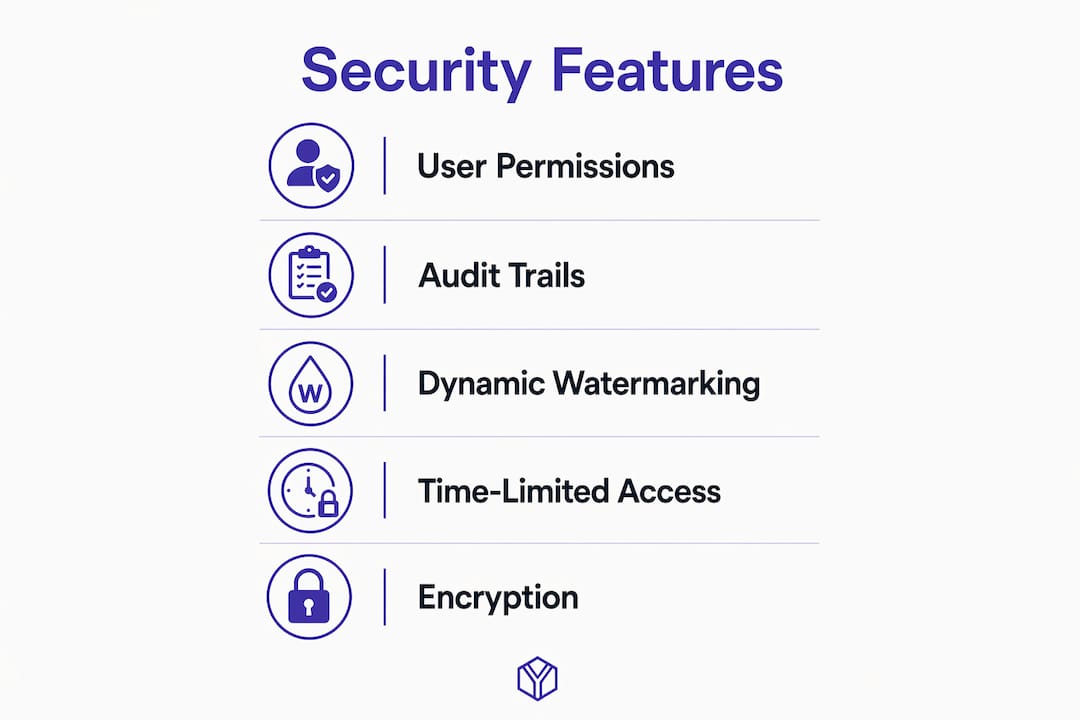
Enterprise-grade virtual data rooms combine several layers of protection that work together. No single feature is sufficient on its own. Here is what to look for:
- 256-bit AES encryption. This is the same standard used by financial institutions. It protects documents both in transit and at rest, so intercepted data is unreadable without the decryption key.
- Granular access controls and role-based permissions. You decide which investor sees which folder, whether they can download or only view, and for how long. Time-limited access and device restrictions prevent documents from living indefinitely on a recipient’s laptop.
- Dynamic watermarking. Watermarking with embedded user identification discourages unauthorized distribution by linking any leaked document directly to the viewer who received it. Modern platforms also detect and block print-screen attempts.
- Immutable audit trails. Every action, including views, downloads, searches, and failed access attempts, is logged and cannot be altered. This log is your evidence in any dispute.
- Geographic and device restrictions. You can limit access to specific countries or approved devices, which matters for cross-border deals with export-control implications.
- Cryptographic enforcement. The most advanced platforms use split-channel file storage so no single node or user holds a complete file. This architecture mitigates insider threats beyond what access control lists alone can achieve.
Pro Tip: Enable dynamic watermarking from day one of your raise, not after you suspect a leak. Retroactive watermarking does not protect documents already in circulation.
How do secure data rooms speed up fundraising and due diligence?
A disorganized data room kills deals. Investors who cannot find documents quickly lose confidence in the founder’s operational competence. The right platform removes that friction through structure and automation.
- Automated document indexing. AI-powered data rooms reduce deal preparation and due diligence time by up to 50% through automated document indexing and review. That time saving translates directly into faster closes and fewer dropped deals.
- Staged document release. You control which documents become visible at each stage of the process. Early-stage investors see the pitch deck and financials. Later-stage buyers get technical documentation and legal agreements. This staged approach protects sensitive information until trust is established.
- Integrated Q&A management. Investors submit questions inside the platform. You answer them there. Every exchange is logged, searchable, and visible to all authorized parties. This eliminates the email thread chaos that slows most fundraising processes.
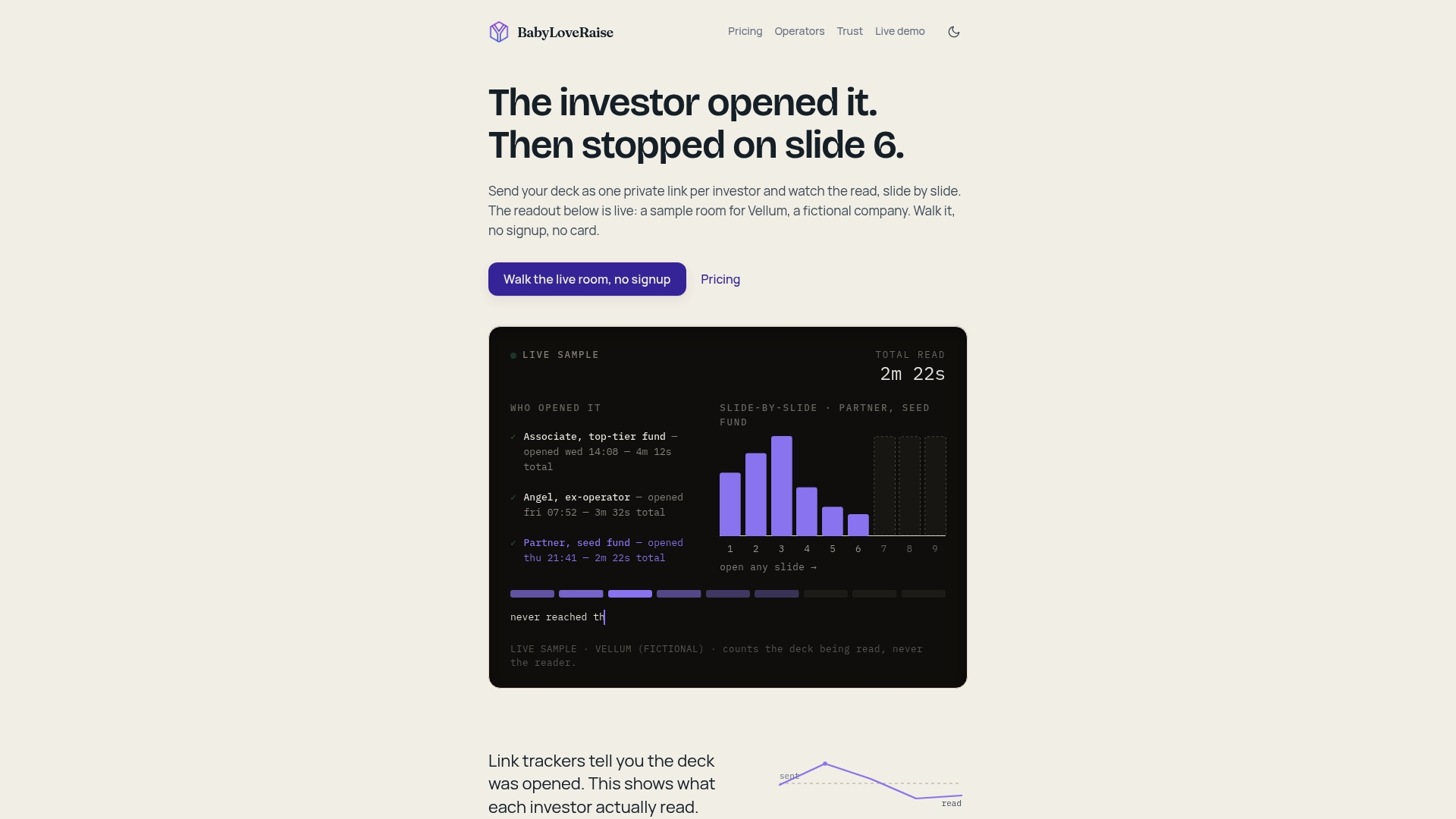
- Real-time activity reporting. You see exactly which investors opened which documents, how long they spent on each section, and whether they returned for a second look. That data tells you who is genuinely engaged and who has gone cold, so your follow-up effort goes to the right people.
- Collaboration without security compromise. Multiple team members can update documents, respond to questions, and manage permissions simultaneously. The platform enforces security rules regardless of who is operating it.
The Q&A workflow deserves special attention. VDRs that simplify question management between buyers and sellers close deals faster than platforms competing only on price or storage capacity. Founders consistently underestimate how much friction a poor Q&A system creates during due diligence.
What compliance certifications should your data room carry?
Certifications are not marketing badges. They are third-party proof that a platform’s security controls actually work and are regularly tested. The table below covers the standards that matter most for startup fundraising and regulated-industry transactions.
| Certification | What it covers | Who needs it |
|---|---|---|
| ISO 27001 | Information security management systems | All industries |
| ISO 27018 | Privacy protection for cloud-stored personal data | Any platform handling personal data |
| SOC 2 Type II | Ongoing audits and operational controls for service organizations | SaaS-dependent businesses |
| 21 CFR Part 11 | FDA-regulated electronic records and signatures | Life sciences, pharma, biotech |
| GDPR | Data residency and privacy for EU-connected data | Any company with EU investors or customers |
21 CFR Part 11 certification is frequently missing from popular platforms, and its absence can delay due diligence for FDA-regulated companies by weeks. If your startup operates in life sciences, pharma, or medical devices, this certification is non-negotiable. Verify it before signing any contract.
Pro Tip: Ask vendors for their most recent SOC 2 Type II audit report, not just a badge on their website. A current report means the audit happened within the last 12 months.
Common mistakes founders make when choosing a data room
Most founders evaluate data rooms on price first and features second. That order of priority produces the wrong outcome. A cheaper platform that slows your investors down costs more in lost deal momentum than the subscription savings.
- Choosing price over usability. Balancing usability with security is critical. An overly complex platform may slow deals despite strong protection. If your investors need a tutorial to open a document, the platform is working against you.
- Ignoring Q&A sophistication. Many startups treat Q&A as a minor feature. Automated indexing and integrated Q&A directly reduce the time-intensive manual management that kills deal timelines. Evaluate this feature as seriously as you evaluate encryption.
- Skipping compliance verification. Do not assume a platform meets your industry’s requirements. Request the actual certification documents and check the expiration dates.
- Underestimating insider threat risk. Most data breaches come from inside the organization, not from external hackers. Platforms that use cryptographic enforcement and threshold reconstruction provide a layer of protection that standard access control lists cannot replicate.
- Failing to set document expiration. Time-limited access is a feature, not a default. Founders who skip this step leave documents accessible to investors who passed months ago.
Pro Tip: Run a test scenario before your raise goes live. Create a dummy investor account, attempt to download a restricted document, and verify the audit log captures the attempt correctly.
Key Takeaways
A virtual data room’s value comes from access control and legal defensibility, not from storage capacity alone.
| Point | Details |
|---|---|
| Security goes beyond encryption | Look for dynamic watermarking, time-limited access, and cryptographic enforcement alongside 256-bit AES. |
| AI cuts due diligence time | Automated document indexing can reduce deal preparation time by up to 50%, accelerating closes. |
| Certifications are verifiable proof | SOC 2 Type II, ISO 27001, and 21 CFR Part 11 confirm a platform’s controls are independently tested. |
| Q&A workflow drives deal speed | Platforms with integrated Q&A management close deals faster than those competing on price or storage. |
| Usability protects deal momentum | A secure platform that confuses investors slows your raise as much as a security breach would. |
What I’ve learned from watching founders use data rooms wrong
Most founders treat a data room as a filing cabinet they hand over to investors. That framing misses the point entirely. A well-configured data room is an active deal management tool. The audit trail tells you which investors are serious. The Q&A log tells you where your narrative has gaps. The permission structure tells you how much trust you have established with each party.
The feature I see founders skip most often is real-time activity reporting. Knowing that an investor opened your financial model three times in two days is more useful than any follow-up email you could send. It tells you the conversation is alive without requiring you to ask. That intelligence changes how you run your raise.
The compliance question also gets underestimated at the early stage. Founders assume compliance certifications only matter for enterprise sales or regulated industries. They are wrong. Sophisticated institutional investors now run their own security reviews of the platforms founders use. A data room without current SOC 2 Type II certification can raise a flag in an LP’s due diligence process, which reflects on the founder’s judgment.
True security in data rooms now includes cryptographic enforcement and forensic certification to prove integrity to regulators, not just encryption at rest. That shift is accelerating. Founders who build this expectation into their platform selection today will not need to migrate mid-raise when an investor’s legal team asks for proof.
— Paul
BabyLoveRaise: built for the fundraising moment
Founders who want the engagement intelligence of a data room without the enterprise pricing or complexity have a direct option in BabyLoveRaise. The platform is built around the raise itself, not general document management. You send one room link, and the dashboard immediately separates investors who never opened your deck from those who read every slide and passed. Per-slide dwell time shows you exactly where attention drops, so deck revisions target the right slides. Share links come in three registers, downloads carry a measured watermark, and when the raise closes, the room converts to a free permanent archive.
BabyLoveRaise prices per raise, not per seat forever, which means the cost fits the moment it serves. For fractional CFOs and fundraising advisors, the white-label Operator tier runs firm-branded rooms across multiple client raises at a fraction of traditional virtual data room pricing.
FAQ
What is a secure data room used for?
A secure data room is used to store and share confidential business documents during fundraising, mergers and acquisitions, due diligence, and other high-stakes transactions. It provides granular access controls, audit trails, and compliance certifications that standard cloud storage cannot offer.
How is a virtual data room different from Google Drive?
A virtual data room logs every user action with timestamp precision, enforces time-limited and role-based permissions, and meets compliance standards like ISO 27001 and SOC 2 Type II. Google Drive offers basic sharing controls with no immutable audit trail or dynamic watermarking.
What certifications should a secure data room have?
The most important certifications are ISO 27001, SOC 2 Type II, and GDPR compliance for most startups. Companies in life sciences or pharma must also require 21 CFR Part 11, which covers FDA-regulated electronic records and signatures.
Can a data room prevent document leaks?
Dynamic watermarking embeds viewer identification into every document, linking any leaked file directly to the recipient. Advanced platforms also use split-channel storage so no single user ever holds a complete file, which significantly reduces insider leak risk.
How does a data room help with investor follow-up?
Real-time activity reporting shows which investors opened documents, how long they spent on each section, and whether they returned. That data lets founders direct follow-up to genuinely engaged investors rather than sending identical messages to everyone on the list.