
Top 3 Fundraising CRMs Alternatives 2026
Explore these 3 fundraising crms alternatives to find the best solution for managing investor engagement and optimizing fundraising efforts.
July 11, 2026 · 10 min read

Tracking which investors read and engage with fundraising decks wastes outreach time and leaves founders guessing about follow-up opportunities. Standard fundraising CRMs lack slide-level analytics, detailed read tracking, or automated follow-up tools tailored to deck engagement. Founders and small fundraising teams can match a fundraising deck engagement product to their workflow and budget without trial-and-error sprints.
Table of Contents
BabyLoveRaise
At a Glance
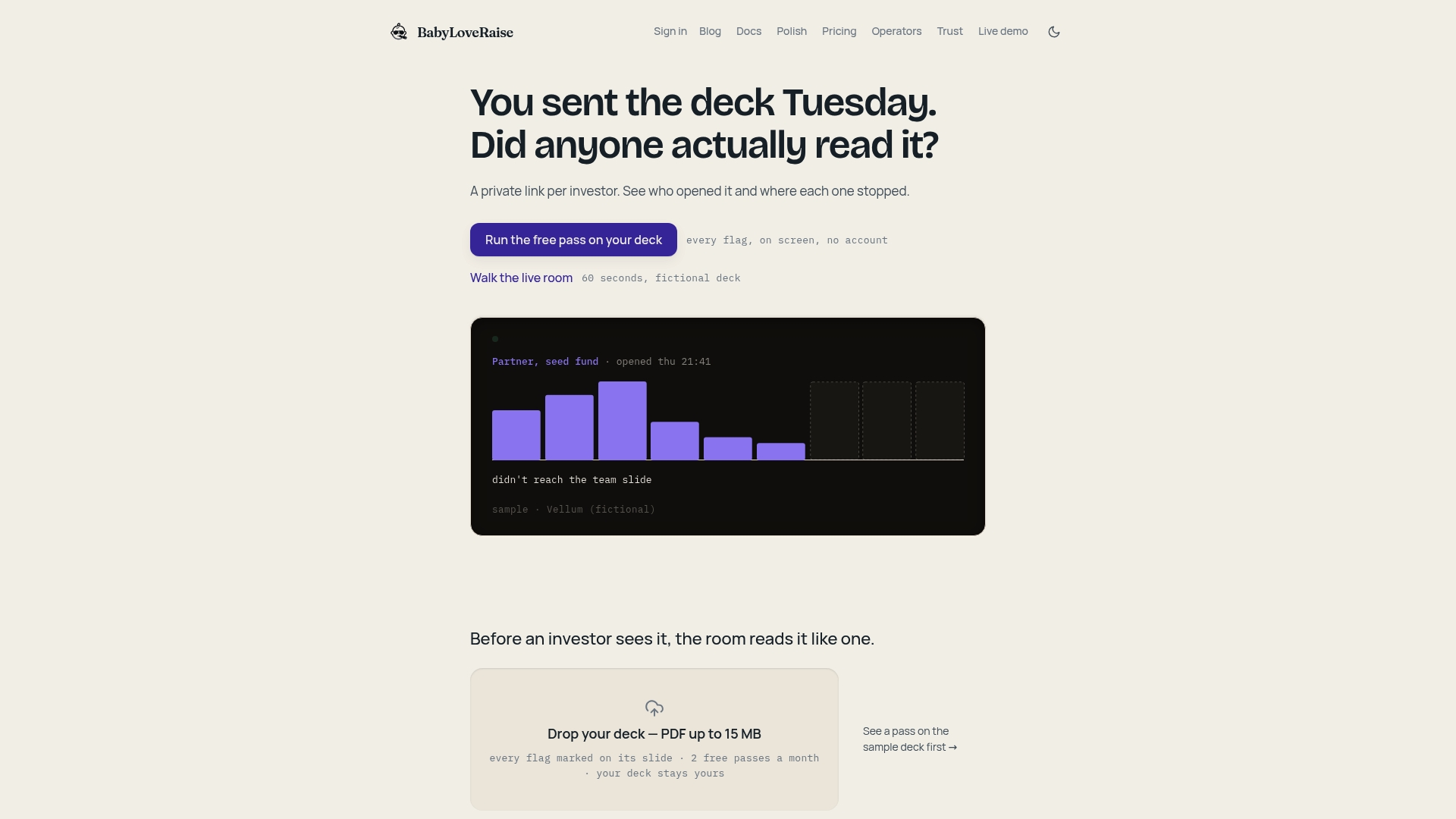
BabyLoveRaise notifies founders on the first read and records who opened the deck, who read to the last slide, and which slides held attention. The owner dashboard separates people who never opened the deck from those who read and passed. Share links come in three registers, downloads can carry a measured watermark, and closed raises become free permanent archives.
Core Features
BabyLoveRaise issues private links that record per slide dwell and read completion, and it flags the first read so founders know when an investor first opened a deck. The platform offers real-time analytics on investor engagement and an automated follow-up drafting tool that generates email copy based on reader behavior. Teams can run multiple rooms, buy editorial passes for human deck edits, and use white label Operator rooms for client work.
Key Differentiator
The standout capability is slide level investor engagement analytics tied directly to follow-up drafting. That coupling lets founders send targeted messages to investors who skimmed key slides or dropped off early. Operator tier options also let advisors run branded rooms across multiple client raises at a lower cost than typical virtual data rooms.
Pros
Detailed read data makes follow-up decisions precise rather than guesswork, so founders spend outreach time on real readers. The combination of automated follow-up drafts and human editorial passes covers both messaging and narrative quality. Flexible access models include a free draft room plus paid raise rooms and editorial passes, and the share link controls and watermarking give founders privacy and document control.
Cons
- May be costly for early stage startups or small teams.
Who It’s For
Founders and small fundraising teams who want to know which investors actually read a deck and how long they spent on each slide. Advisory firms and fractional CFOs that manage multiple client raises will find the Operator model useful. Teams that need design software rather than engagement tracking should look elsewhere.
Unique Value Proposition
Charges are structured around each raise rather than per seat, which changes how teams budget for fundraising tools. Paying per raise keeps costs tied to fundraising activity and lets occasional founders avoid ongoing per user fees. Combined with permanent archive rooms and optional editorial passes, the model shifts cost toward the event you run instead of a year round subscription.
Real World Use Case
A solo founder sends a private room link to ten targeted angels and watches the dashboard mark who opened the deck and which slides lost attention. The system drafts follow-up notes tailored to each investor based on their read behavior. The founder uses a paid raise room and a single editorial pass to polish the narrative and convert readers to meetings.
Website: https://babyloveraise.com
Foundersuite
At a Glance
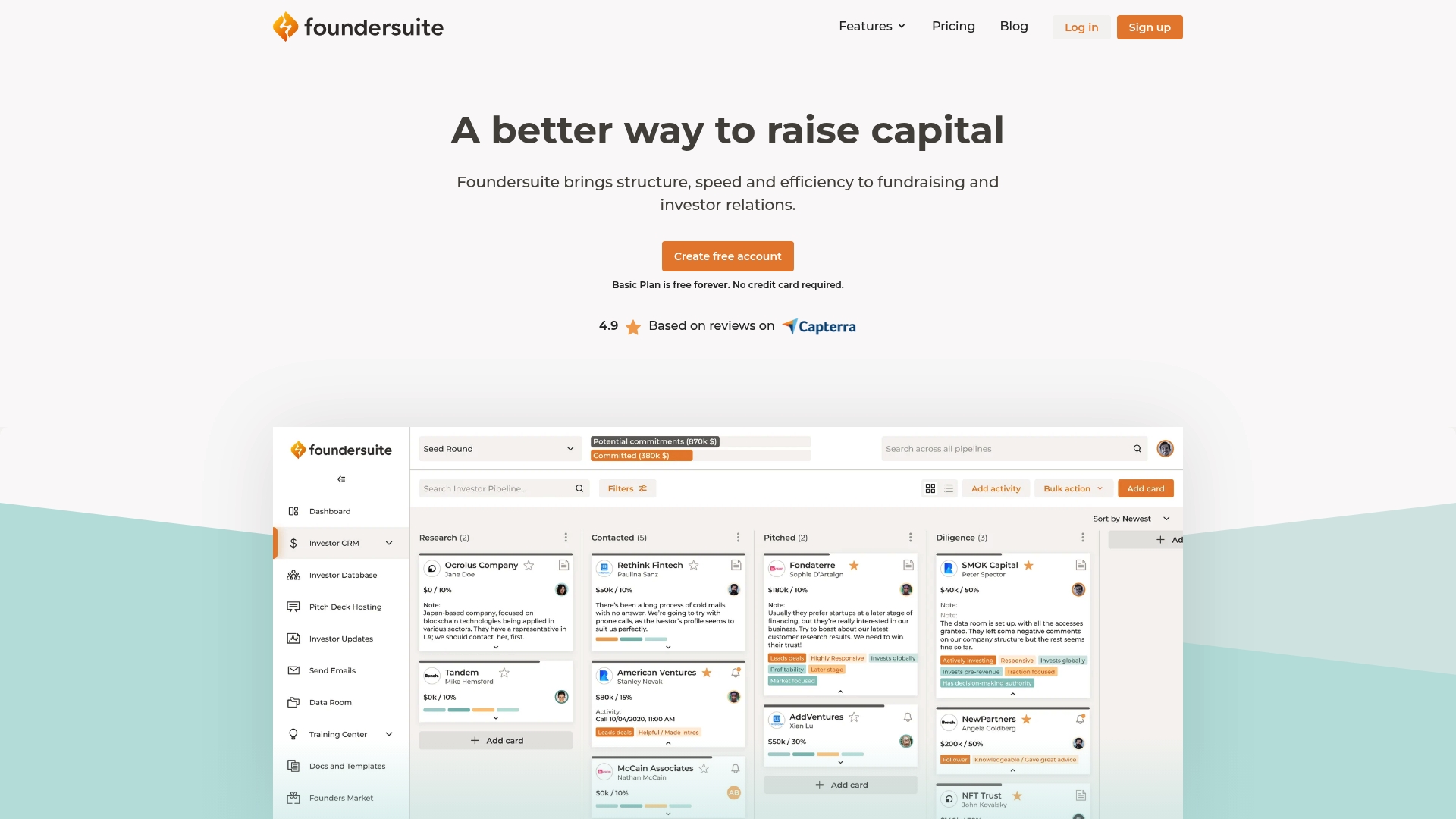
Foundersuite reports a searchable investor database of 216,000 investors worldwide. The platform combines CRM, pitch hosting, email outreach, and a data room into one product. A free forever basic plan lowers the entry barrier for early-stage founders.
Core Features
The product offers an investor database search and an investor CRM that tracks where prospects sit in your pipeline. Pitch deck hosting includes view tracking so you can see who opened and which slides held attention. Email integration, a virtual data room, and built-in fundraising templates support outreach and due diligence workflows.
Key Differentiator
Foundersuite groups prospecting, outreach, and document sharing in a single interface. The free forever basic plan sits alongside premium capacity upgrades. That package reduces the need to stitch separate investor tools during an early raise.
Pros
The suite covers prospecting through diligence, so you can keep lists, outreach, and documents in one place. Foundersuite’s marketing materials state it has helped raise over $21 billion for its users. The vendor also reports adoption by more than 100,000 startups and organizations, which shows the platform’s reach and template library depth.
Cons
- The interface can feel complex for first time fundraisers and advisors unfamiliar with typical fundraising flows.
- Several important features and higher capacity are gated behind paid plans, which may strain very small budgets.
- The platform is web dependent, so any service outage could interrupt active outreach or investor reads.
When It May Not Fit
If your team lacks fundraising experience, the setup and feature density may slow adoption rather than speed it. If you only need a single lightweight CRM and occasional file sharing, the premium tiers may be more than you need financially. Organizations that require offline or non-digital outreach workflows will find the platform limited in that area.
Who It’s For
Foundersuite fits startup founders running formal capital raises and investor relations teams at accelerators. It also suits advisors and venture firms that want a central place for prospecting lists and deck tracking. Choose it when you want prospect discovery and outreach in the same product.
Real World Use Case
The vendor describes a biotech startup using Foundersuite to manage outreach, host pitch decks, and send investor updates. That startup reportedly raised over $10 million in seed funding within six months while tracking investor engagement by slide. The workflow reduced redundant follow ups and focused conversations on actual readers.
Pricing
A basic tier is free forever for core features. Premium plans are sold annually and the vendor lists pricing from $745 to $1,609 per year. Monthly billing options are not listed by the company.
Website: https://foundersuite.com
hopohopo.io
At a Glance
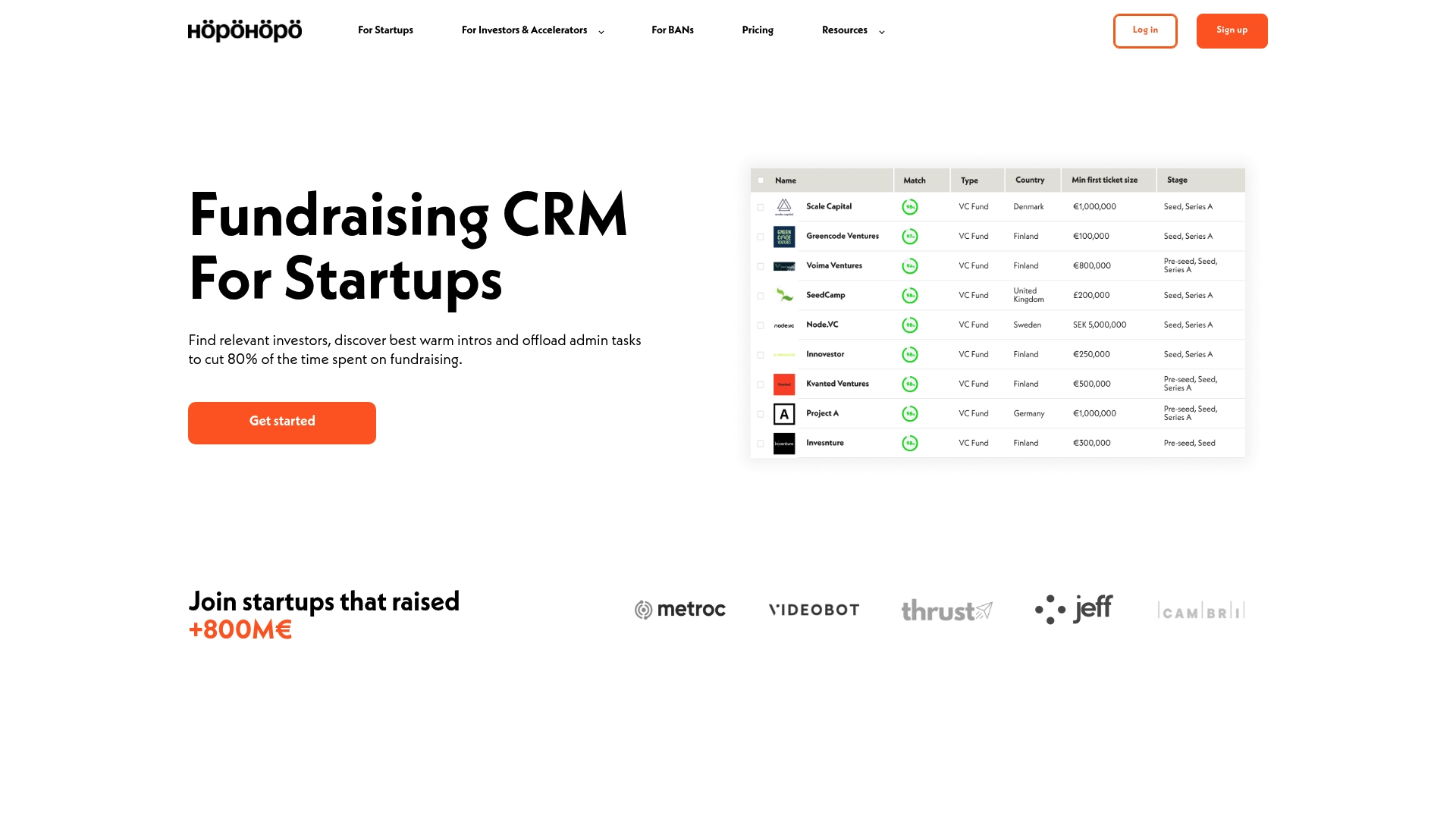
According to the company, its curated investor network has backed startups that raised over €800 million. The vendor advertises members can reduce fundraising admin time by up to 80%. The site targets founders who want targeted investor matches and warm intros rather than endless cold outreach.
Core Features
hopohopo.io lists curated investor profiles and a matching registry that surfaces relevant backers for specific funding stages. The site facilitates warm intros and records outreach so founders track which contacts respond. It also layers simple admin automations to cut repetitive outreach work and prioritize follow ups.
Key Differentiator
That figure about past fundraising history sets hopohopo.io apart from generic directories. The combination of a curated investor registry and focused automations gives founders a shorter, higher-quality outreach list. That claim about time savings explains why the site emphasizes automating admin tasks over bulk email blasts.
Pros
hopohopo.io centralizes investor profiles and warm intros so founders trade spreadsheets for a curated list that highlights relevant matches. The site showcases startups with documented funding results, which helps founders vet investor fit before they reach out. That claim about time savings frees founders to spend more hours on investor conversations and product work.
Cons
-
Limited public detail on specific features and integrations makes it hard to map hopohopo.io into an existing fundraising stack.
-
Third-party reviews suggest restrictions in customization and scope for unusual industries or complex rounds.
-
Pricing is not clearly published, which complicates budgeting for lean early stage teams.
-
Startups not seeking investment or those that prefer in-person investor networks will gain little from the service.
When It May Not Fit
Founders running large later stage rounds or complex syndication will likely need deeper customization than this site appears to provide. Teams that require extensive CRM integrations or in-house developer workflows may find features too limited. founders who prefer manual, relationship driven outreach rather than curated introductions will not benefit.
Who It’s For
Founders and small fundraising teams actively raising seed or preseed capital and looking to shorten administrative overhead will find this site relevant. The target is early stage startups seeking curated investor introductions and a lightweight way to manage outreach. It suits teams that value curated signals over broad cold-email campaigns.
Real World Use Case
A seed stage founder uses hopohopo.io to find five investors who match their sector and round size. The site delivers warm intros to two of those investors and automates follow up reminders. The founder spends fewer hours on outreach and gets faster investor responses.
Website: https://hopohopo.io
Comparison of alternatives
Founders considering how to track investor engagement per slide will find contrasting solutions across the reviewed platforms. Each product offers distinct advantages tailored to varying needs in the fundraising CRM landscape.
Engagement Tracking and Analytics Depth
BabyLoveRaise excels in delivering detailed analytics on investor behavior, drilling down to slide-level interactions and providing automatic tailored responses. This advanced engagement tracking enables founders to understand investor focus and optimize communication accordingly. Foundersuite includes view tracking, but its engagement analysis lacks the granular detail provided by BabyLoveRaise. hopohopo.io, focusing on curated investor introductions, does not offer comparable slide-level metrics or follow-up customization features.
Breadth of Investor Base and Database Integration
Foundersuite leads in the size and comprehensiveness of its database, boasting over 216,000 global investor entries. This breadth provides founders with a wide pool to source appropriate investors and manage interactions efficiently. In contrast, hopohopo.io emphasizes quality over quantity by curating investor connections suitable for specific funding stages and profiles. BabyLoveRaise provides interaction-specific engagement tools but does not include a public investor database, placing it outside competition on this dimension.
Best fit
- Founders seeking in-depth metrics on how prospective investors engage with their decks will find BabyLoveRaise the most suitable option.
- Those desiring a vast investor database alongside integrated outreach tools for formal capital raises should consider Foundersuite.
- Teams prioritizing high-quality warm introductions tailored to their startup’s sector and funding stage might see hopohopo.io as the best choice.
Our pick
BabyLoveRaise ultimately stands out for its unique capacity to track investor interactions at the slide level and automate corresponding tailored follow-ups. The integration of these features enables fundraising teams to maximize meeting outcomes while targeting genuine interest. Still, if your priorities center on connecting with a broader pool of investors or employing curated introductions, exploring the outlined alternatives may better suit your needs.
Identifying the right tool for fundraising crms relies on evaluating each platform’s capabilities in engagement tracking and user-specific follow-up support.
| Product | Core Feature | Key Differentiator | Best For | Pricing | Notable Limitation |
|---|---|---|---|---|---|
| BabyLoveRaise | Slide-level investor engagement analytics | Coupled automated follow-up drafts | Founders and advisory firms | Price not published | May be costly for small early-stage startup teams |
| Foundersuite | Investor CRM and pitch deck hosting | Free forever basic plan | Startups and investor relations teams | $745–$1,609 annually | Can feel complex for first-time fundraisers |
| hopohopo.io | Curated investor profiles and warm intros | Focus on curated investor matches | Seed-stage startups | Price not published | Limited public detail on features/integrations |
How Can Founders Improve Fundraising Follow-Ups With Better Deck Engagement Insights
Fundraising CRMs often include basic investor tracking but miss key details like who actually reads your deck and for how long. BabyLoveRaise addresses this by offering per-slide investor engagement analytics that highlight who opened the deck, who read to the last slide, and where attention dropped. This solves the common problem of not knowing whom to follow up with or how to improve your pitch narrative.
BabyLoveRaise is designed for founders and small fundraising teams who want to turn silent prospects into actionable next steps. Its unique pricing per raise makes it accessible without ongoing seat fees. To start seeing exactly which investors read your deck and send personalized follow-ups based on real data, visit BabyLoveRaise and explore how your next raise room can give you the clarity missing from standard fundraising CRMs.
FAQ
How does BabyLoveRaise improve fundraising deck engagement?
BabyLoveRaise offers detailed read data that shows slide-level investor engagement. This feature allows founders to understand which slides captivated audience attention the most. Use this insight to tailor follow-up communications to engage interested investors more effectively.
What is the difference between BabyLoveRaise and Foundersuite in terms of outreach capabilities?
Foundersuite provides a comprehensive suite that combines prospecting, outreach, and document sharing in one platform. BabyLoveRaise excels in tracking investor engagement on a slide-by-slide basis and automating follow-up drafting based on individual reader behavior. Choose BabyLoveRaise if you need specific engagement insights for your fundraising decks.
Which platform offers better real-time analytics for investor engagement, BabyLoveRaise or hopohopo.io?
BabyLoveRaise generates real-time analytics that record investor engagement and dwell time for every slide of the presentation. This capability enables founders to make informed follow-up decisions based on solid data, enhancing their outreach strategy significantly. Expect to gain actionable insights from this detailed engagement tracking.
Can BabyLoveRaise help track which investors engaged with a fundraising deck?
Yes, BabyLoveRaise records who opened the deck, how long they spent on each slide, and which parts they paid the most attention to. This level of tracking allows founders to prioritize follow-ups with investors who showed genuine interest. Be prepared to refine your outreach based on these insights.
How does BabyLoveRaise’s pricing structure benefit founders?
BabyLoveRaise charges based on each individual raise rather than per seat, making it more budget-friendly for occasional fundraisers. This pricing model aligns costs with fundraising activity, allowing for greater financial flexibility. Expect this structure to reduce overhead expenses during low-activity periods.