
Reverse Due Diligence: A Founder's Guide to Vetting VCs
Discover how reverse due diligence can empower founders to vet VCs effectively. Learn to analyze partner behavior before signing.
July 25, 2026 · 8 min read

What reverse due diligence actually means for founders
Investors investigate you for months. You should investigate them back. Reverse due diligence is the process of founders researching venture capital partners before signing a term sheet, focusing on behavioral patterns, investment thesis alignment, and governance terms that will shape your company for years.
This is not the M&A version of reverse diligence, where a seller audits their own financials to look attractive to buyers. For pre-seed and seed founders, the goal is narrower and more personal: figure out whether this specific partner will be a constructive board member when things go sideways, or a liability.
Investors conduct thorough background checks on founders, yet founders rarely return the favor. That asymmetry is a structural problem. The three areas that matter most:
- Partner behavior under stress. How did this investor treat portfolio founders during a down round, a pivot, or a missed milestone?
- Investment thesis fit. Does their current fund thesis genuinely match your stage and sector, or are you a stretch deal?
- Governance terms. Board seat composition, veto rights, and liquidation preferences are control levers that often matter more than the headline valuation.
Firms like CRV publish guidance on this process. Glacier Lake Partners has written extensively on the structural risks of skipping it. BabyLoveRaise builds tools that give founders the engagement data to know which investors are actually reading their decks before any of these conversations begin.
Table of Contents
- When and how to conduct your investor due diligence
- Key investor behaviors that predict future support
- How BabyLoveRaise supports your investor evaluation
- Best practices to protect yourself before you sign
- A practical checklist for founders
- What to do when the findings are bad
- Key Takeaways
When and how to conduct your investor due diligence
Timing is everything. The term sheet stage is the optimal moment to conduct reverse due diligence because you still hold negotiating leverage. Once you grant exclusivity, that leverage evaporates. Conducting this work after term sheet receipt but before signing keeps you in the driver’s seat.
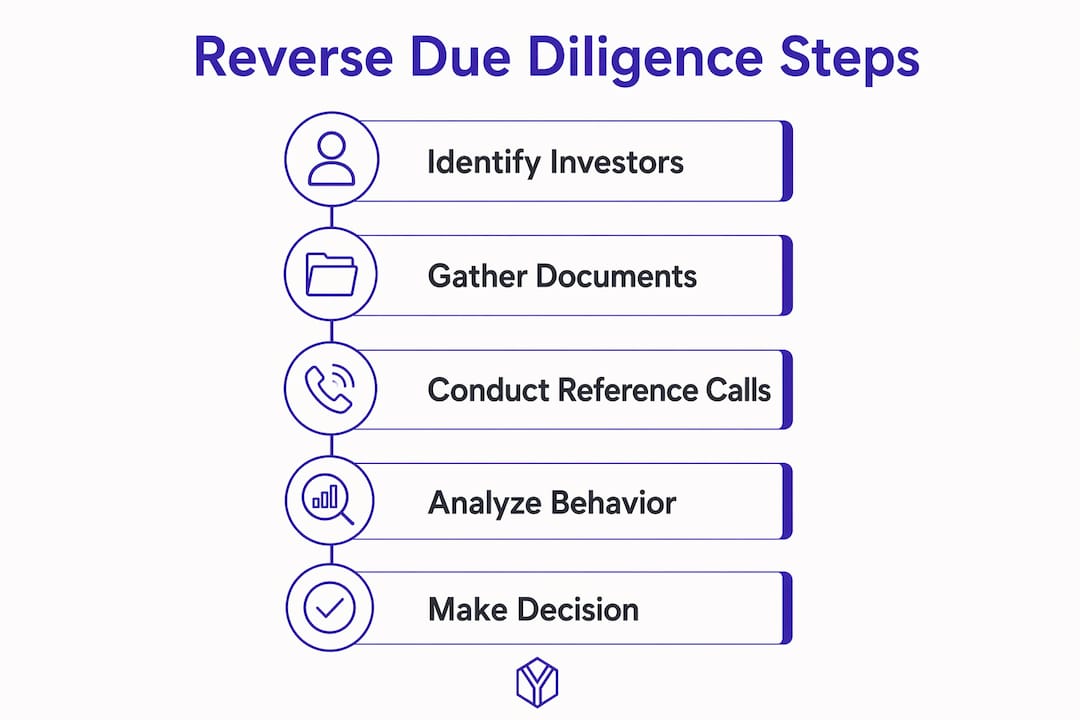
The practical steps:
- Request references from the firm. Ask for two founders from their portfolio they suggest. Take those calls, but treat them as a floor, not a ceiling.
- Source independent references. Use LinkedIn to identify founders who exited portfolio companies 18–36 months ago and are no longer at the company. People who have moved on speak more candidly than current operators who still depend on the firm’s goodwill.
- Ask consistent questions across every call. Patterns only emerge when you ask the same questions to multiple people. Vary the order, not the substance.
- Analyze the term sheet in parallel. Red flags in the document include two-times liquidation preferences, participating preferred shares, full ratchet anti-dilution clauses, and broad veto rights over operational decisions. These provisions signal a firm that prioritizes control over partnership.
Pro Tip: Ask every reference the same closing question: “Would you take money from this investor again?” Then stop talking. A clean “yes” with no hesitation is one data point. A pause, a qualifier, or a “they were fair, but…” tells you far more than the words that follow.
A reverse diligence checklist built specifically for founders covers the document and reference layers in detail. The reference call methodology, though, is where most founders underinvest.
Key investor behaviors that predict future support
Investor behavior during portfolio crises is the single best predictor of how they will treat you when your company hits a rough patch. Not their marketing materials. Not their LinkedIn posts. What they actually did when a portfolio company missed its Series A metrics.
Questions to ask references directly:
- Did the investor behave with integrity when the company faced a serious setback?
- Were there any ethical concerns about how they handled board decisions?
- Did they participate in follow-on rounds, or did they pass and leave the company to find new capital alone?
- How did they exercise board influence? Constructive input, or operational vetoes on decisions that should have been the founder’s call?
Governance risks deserve specific attention. A board seat sounds neutral until the investor uses it to block a hire, a pivot, or an acquisition offer. Veto rights over operational decisions can paralyze a company faster than any market headwind.
Watch for these red flags:
- Reluctance to provide any references before signing. A firm that resists reference introductions during the pre-signing window is telling you something about how they operate.
- Aggressive operational veto clauses buried in governance schedules.
- No track record of participating in follow-on rounds for companies that needed bridge capital.
- Investor brand and governance style that could limit your ability to raise future rounds from top-tier firms.
The transparency signals that matter most often show up before the term sheet is even signed, in how responsive and straightforward the partner is during the process itself.
How BabyLoveRaise supports your investor evaluation

Before you get to reference calls, you need to know which investors are genuinely engaged. That is where BabyLoveRaise changes the picture for pre-seed and seed founders.
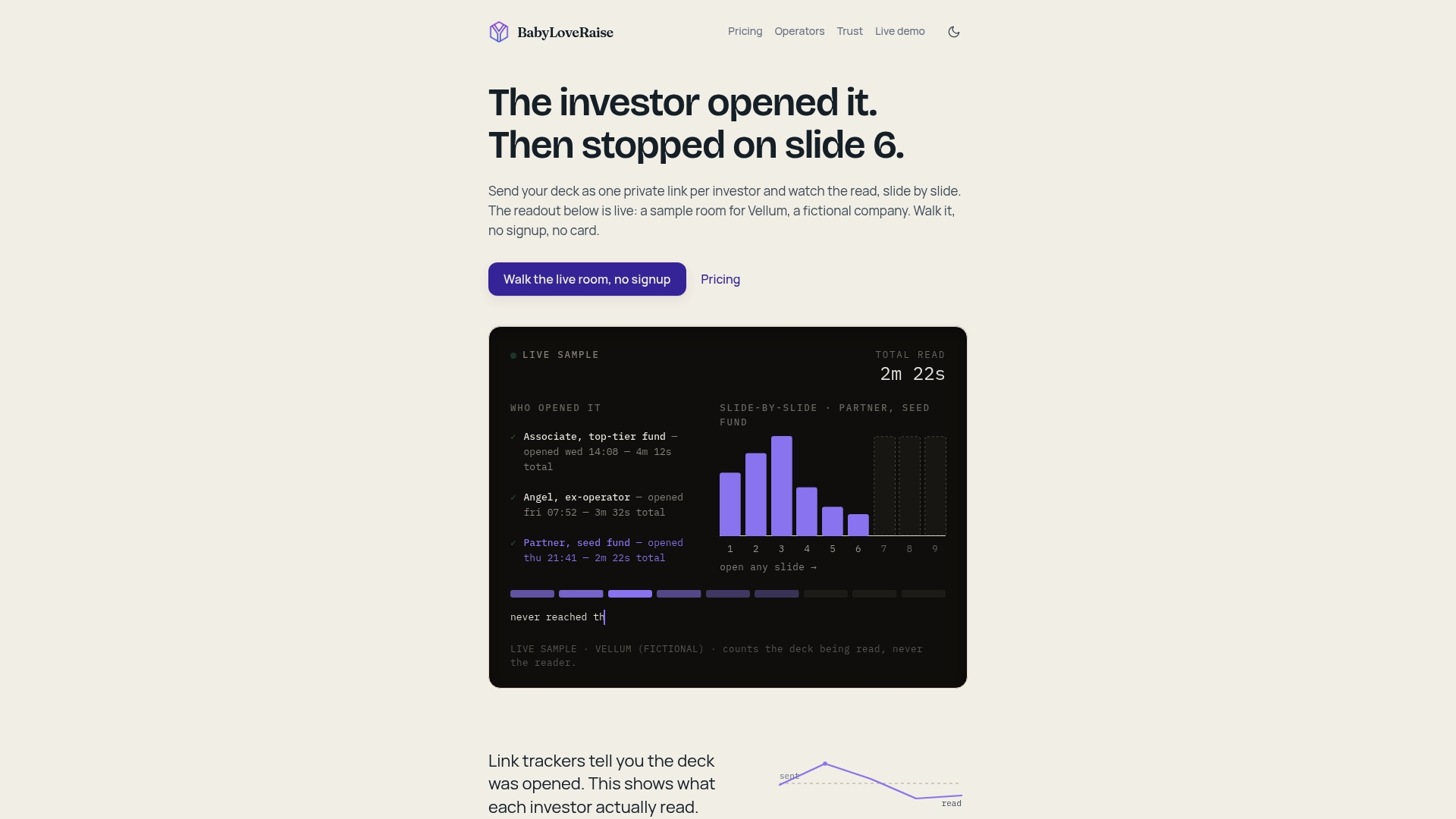
The platform gives you a hosted raise room for your pitch deck. When you send a link, you see exactly who opened it, which slides they read, and where attention dropped off. The two silences that look identical without analytics, “never opened it” and “read everything and passed,” become two different, prioritized states.
What that means practically:
- First-read notifications tell you the moment an investor opens your deck, so follow-up timing is based on actual behavior, not guesswork.
- Per-slide engagement data shows which sections held attention and which got skimmed. If your market slide loses everyone, you know before the next send.
- Target list of deck completers lets you focus reference call energy on investors who finished the deck and are genuinely in consideration.
- Three link registers (first send, forwardable, private) give you control over how the deck circulates.
BabyLoveRaise is priced per raise, not per seat forever, which fits the fundraising cycle rather than adding a permanent overhead line. A white-label Operator tier serves fractional CFOs and fundraising advisory firms running multiple client raises. Optional editorial passes and narrative development support cover founders who want hands-on help with the deck itself.
The BabyLoveRaise blog covers the full fundraising process, including due diligence documents and data room strategy, for founders who want to go deeper on the process.
Best practices to protect yourself before you sign
The short version: do this work after you receive a term sheet, before you sign anything.
- Conduct the hybrid reference call approach: two firm-provided references plus two to three independently sourced founders from the portfolio.
- Ask consistent questions across all calls and listen for hesitation, not just content.
- Review every governance provision in the term sheet, not just the valuation and ownership percentage.
- Use engagement analytics from BabyLoveRaise to identify which investors have actually read your deck before you invest time in reference calls on their behalf.
- Be ready to walk away. A term sheet from the wrong investor is worse than no term sheet.
The investor tracking tools available to founders today make it possible to combine behavioral data with reference intelligence in a way that was not practical five years ago.
A practical checklist for founders
Work through this in order, starting the day you receive a term sheet:
- Map the portfolio. Pull the firm’s full portfolio from their website and LinkedIn. Identify every company they have backed at your stage and sector.
- Identify independent references. Find founders who left portfolio companies 18–36 months ago. These are your most candid sources.
- Request firm-curated references. Ask the partner directly for two founder references. Their willingness to provide them quickly is itself a data point.
- Prepare a consistent question set. Cover integrity, board conduct, follow-on participation, and the “would you take their money again” question.
- Conduct all reference calls before exclusivity. Once you grant exclusivity, you lose the ability to walk away cleanly.
- Audit the term sheet for control provisions. Flag liquidation preferences above one times, participating preferred, full ratchet anti-dilution, and any veto rights over hiring or strategy.
- Check the firm’s fund vintage. A fund with fewer than two years of life remaining faces LP pressure to exit, which distorts their incentives as your board member.
- Verify follow-on participation history. Ask references directly whether the firm reinvested in later rounds. Lack of reinvestment often signals future challenges.
What to do when the findings are bad
You have done the calls. The references hedged. The term sheet has a two-times participating preferred clause and a veto right over any acquisition under $50 million. Now what?
Negotiate first. Most founders treat term sheet provisions as fixed. They are not. Push back on the liquidation preference, the anti-dilution structure, and any veto rights that go beyond standard protective provisions. A firm that refuses to negotiate governance terms is showing you exactly how they will behave on your board.
Use what you know as leverage. If your reference calls revealed that a partner has a pattern of blocking founder decisions, name it in the negotiation. You do not need to be adversarial. “We heard from a few founders that board approval requirements created friction on operational decisions. We’d like to narrow that scope” is a professional, specific ask.
Set a clear threshold for walking away. Decide before you negotiate what you will not accept. A two-times liquidation preference with participation rights and a board veto over hiring is a combination that can effectively transfer control of your company. Know your line before you sit down.
If the investor will not move on terms that matter and the reference calls raised real concerns, walking away is the right call. A bad investor relationship compounds over years. The cost of a misaligned board member shows up in every hard decision you will ever make.
Key Takeaways
Reverse due diligence conducted between term sheet receipt and signing is the highest-leverage window founders have to protect their long-term control and find genuinely aligned investors.
| Point | Details |
|---|---|
| Optimal timing | Conduct investor research after receiving a term sheet but before signing, while negotiating leverage still exists. |
| Hybrid reference calls | Combine two firm-provided references with two to three independently sourced founders who exited 18–36 months ago. |
| Behavioral predictor | Investor conduct during portfolio crises is the most reliable indicator of future board behavior. |
| Term sheet red flags | Two-times liquidation preferences, participating preferred, full ratchet anti-dilution, and broad veto rights signal control prioritization. |
| Engagement analytics | BabyLoveRaise per-slide deck data identifies which investors finished your deck, focusing reference call effort where it counts. |