
48 Hour Follow Up: Loginless Document Tracking for Founders
Founders' guide to loginless document tracking for fundraising. Send tracked links, follow up within 48 hours, view per slide dwell, and revoke access.
September 20, 2026 · 13 min read

Loginless document tracking uses a unique share link to record who opens a file, how long they stay on each page, and whether they came back for a second look, all without asking the recipient to create an account. It works best for investor outreach, sales proposals, and any workflow where forcing a login would kill your reply rate. Save gated, credential-based access for regulated or highly sensitive files where you need a verified identity attached to every view.
TL;DR:
- Loginless document tracking uses unique share links to log engagement without requiring recipients to create accounts, improving response rates for outreach.
- Essential features include real-time open notifications, per-page dwell time, device and location data, watermarking, and revocation capabilities for sensitive files.
- The system relies on ephemeral tokens linked to server and browser events, but engagement data may be estimated and affected by background tabs or inactive periods.
- Fundraising and sales workflows benefit most from timely alerts, detailed attention metrics, and controlled link sharing to optimize follow-up and legal compliance.
- Using short-lived links with immediate revocation and transparent monitoring policies helps balance engagement insights with trust and security.
BabyLoveRaiseTrack Investor Deck EngagementSend one raise room link, see who opened, who finished, and which slides held attention.Explore BabyLoveRaise
Table of Contents
- What Is Loginless Document Tracking and What Should It Include?
- How Does Loginless Tracking Actually Work?
- Where This Actually Gets Used
- How Do You Evaluate a Loginless Tracking Approach?
- How BabyLoveRaise Applies This to Fundraising
- Rules of Thumb for Using This Responsibly
- Try BabyLoveRaise for Your Next Raise
- Sources
- FAQ
What Is Loginless Document Tracking and What Should It Include?
Forcing a login before someone can read your pitch deck is a conversion killer. An investor who gets an email asking them to create a password before viewing ten slides will often just close the tab. Loginless tracking removes that friction entirely: the recipient clicks one link, the document opens, and every meaningful interaction gets logged on the sender’s side without the reader ever typing a password.
The value isn’t just convenience. It’s the data you get back. A properly built loginless system tells you the difference between “hasn’t looked yet” and “read every slide and went quiet,” two situations that look identical if all you have is an unanswered email. That distinction alone changes who you follow up with and when.
Here’s the feature checklist worth holding any tool or build against:
- Real-time open notifications so you know the moment someone clicks the link, not hours later in a digest email.
- Per-page dwell time, sometimes called time-on-page, showing which slides or sections actually held attention.
- Device and location metadata that adds context (mobile skim vs. desktop deep read) without identifying the specific person.
- Download and print alerts, since a download often signals the document is being forwarded internally.
- Watermarking, ideally dynamic, so a leaked PDF can be traced back to the specific link that generated it.
- NDA gating, an optional checkbox or acknowledgment step before sensitive sections unlock.
- Expiry and revocation, the ability to kill a link’s access instantly if a deal falls through or a relationship changes.
Founders sending a deck to fifty angels care most about open alerts and per-slide dwell. Enterprise teams running vendor NDAs or contract redlines lean harder on watermarking and revocation, because their documents live longer and carry more legal weight. Fundraising-specific analytics that flag first-read moments matter far more to a solo founder than generic file-sharing metrics ever will.
How Does Loginless Tracking Actually Work?
The mechanism is simpler than it sounds, but the details determine whether the data you get back is trustworthy.
Every loginless link runs on an ephemeral token, a unique string baked into the URL that maps to one specific document, one specific recipient context, and one specific set of permissions. No signup model illustrates the pattern well: uploaders get a token-based management URL that lets them see download counts and delete files without recipients ever creating an account. That same logic scales up into full engagement tracking. The token isn’t the password. It’s the identifier that lets the server know which events belong to which link.
Once someone opens the document, the tracking splits into two categories. Server-side logging captures the reliable stuff: page loads, timestamps, IP-derived location, and download requests. Client-side capture (JavaScript running in the reader’s browser) handles the more granular signals like scroll depth and active dwell time, but it’s less trustworthy. A backgrounded browser tab can still report as “open” even though nobody is looking at the screen.
This is where measurement gets genuinely tricky. A reader who opens your deck, gets pulled into a call, and comes back twenty minutes later might show up as a single long session instead of two distinct reads. Reliable providers stitch server-side session events together and filter out obvious idle gaps, but even the better implementations report engagement time as an estimate, not a stopwatch reading. If you want to sanity-check any tool’s accuracy, send yourself a tracked link across two devices, leave one tab backgrounded for ten minutes, and see whether the dwell numbers reflect reality or just count elapsed time.
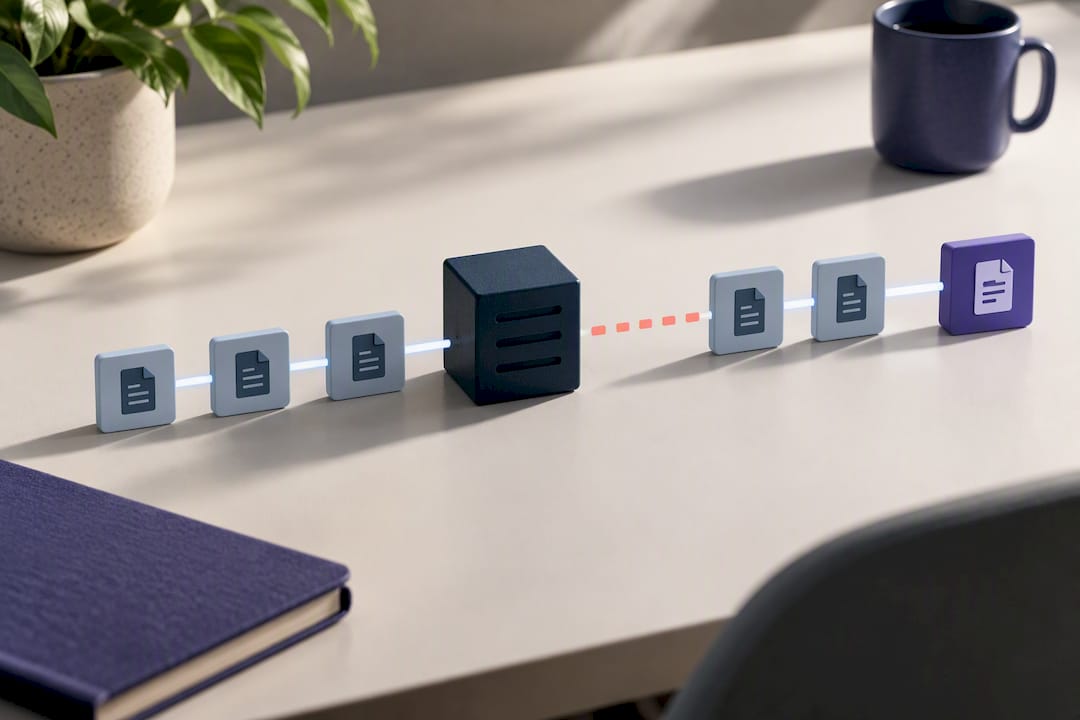
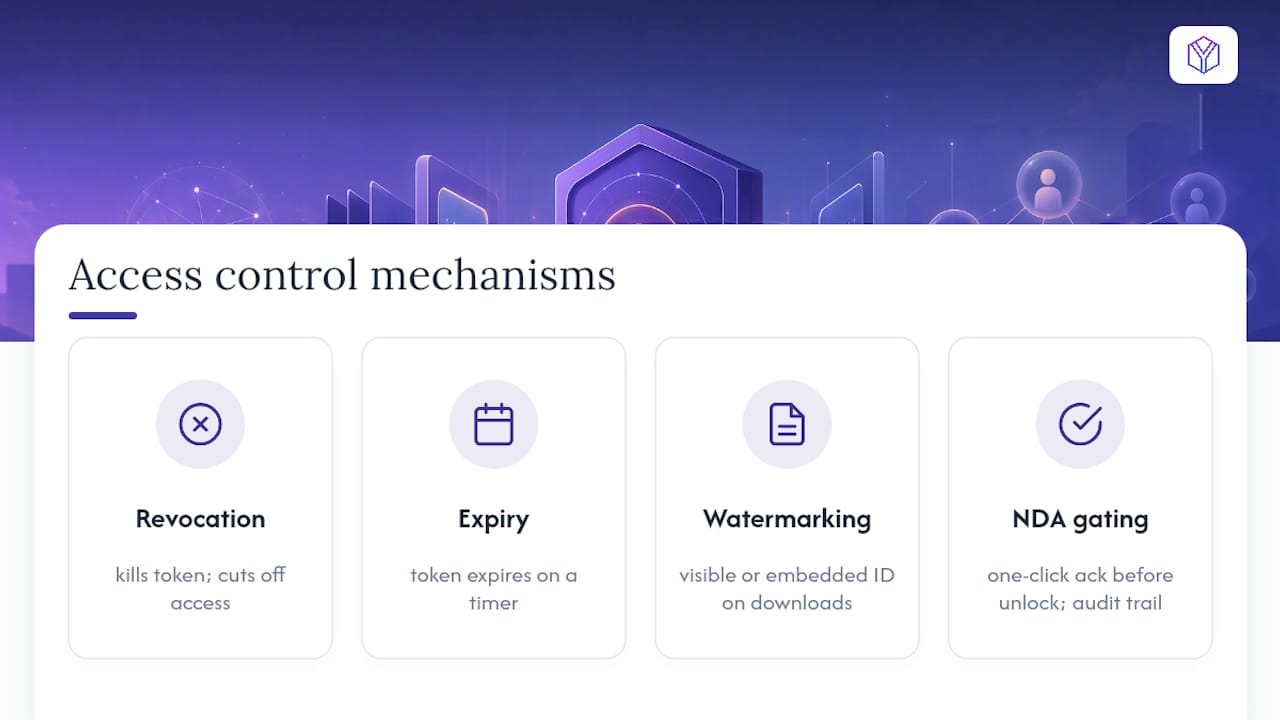
The controls layer sits on top of this logging. Revocation kills the token immediately, cutting off access even to someone who still has the link saved. Expiry does the same thing on a timer. Watermarking stamps a visible or embedded identifier onto every download, tying a leaked copy back to the specific link and recipient. NDA gating adds a one-click acknowledgment step before the file unlocks, which creates a lightweight audit trail without requiring a full account. Some tools go further and add blockchain-based timestamping for signature audit trails, generating a completion certificate that records the interaction sequence in detail, though that level of rigor tends to matter more for signed contracts than pitch decks.
The most common failure mode is false positives from bot scanners and email preview services that “open” a link automatically. A well-built system filters those out by checking user-agent patterns and requiring a minimum interaction threshold before logging a real “open.”
Where This Actually Gets Used
Loginless tracking earns its keep the moment you stop treating it as a novelty and start building workflows around it. A few patterns show up constantly among founders and professionals who use it well.
- Fundraising outreach. Send a tracked deck link to your target list. The moment an investor opens it, you get a first-read alert. If your data shows they lingered on the traction slide and the cap table but skipped the team page, that tells you exactly what to address in your follow-up email instead of sending a generic “just checking in” message.
- Sales and proposal follow-up. Time-on-price-page and repeat visits are the strongest buying signals a proposal can send. A prospect who reopens your pricing section three times in two days is a warmer lead than one who opened the document once and never came back, regardless of what they say on your next call.
- Contract negotiation. Audit logs establish who reviewed what and when, which matters when a deal stalls and you need to know whether the holdup is legal review or simple inattention. Controlled, watermarked downloads reduce the chance that a draft term sheet circulates further than intended.
- Internal and contractor reviews. Short-lived links with tight expiry windows work well for giving a contractor or advisor temporary access to a document without provisioning a full account they’ll forget to have removed later.
The fundraising case is worth dwelling on because the timing math matters. If you treat a first-read notification as a trigger to reach out within roughly 48 hours, you’re contacting the investor while your deck is still fresh in their inbox and mind. Waiting a week to follow up on an open you never saw is how warm leads go cold. You can build the tracked share link and follow-up rhythm into a repeatable weekly cadence rather than reinventing it every time you email a new name.
How Do You Evaluate a Loginless Tracking Approach?
Not every tool that claims “real-time tracking” delivers the same accuracy or the same protections. Before you commit to a platform, or decide to build something in-house, run the claims against a short checklist.
Analytics fidelity comes first. Test whether page-level accuracy holds up across devices and tabs, whether the system stitches sessions correctly when a reader leaves and returns, and whether you can replay the actual event sequence instead of just seeing a summary number. A tool that reports “engaged for 4 minutes” with no way to see which slides drove that number isn’t giving you enough to act on.
Controls you must verify before trusting sensitive material to any link:
- Revocation that takes effect immediately, not on the next sync cycle.
- Expiry dates you can set per link, not just account-wide.
- Watermarking that’s dynamic enough to trace a specific leak back to a specific recipient.
- NDA or email gating that doesn’t require the recipient to build a full profile.
- Download and print blocking, or at minimum, alerts when either happens.
Privacy and compliance deserve real scrutiny. Ask how long the platform retains access logs and IP data, and whether that retention window is disclosed to you as the sender. Shorter retention windows reduce your exposure if the provider itself ever gets breached, since minimizing stored personal data measurably reduces breach impact. Transparency toward the recipient matters too. A footer note that the document is being monitored is a small courtesy that heads off the “were you spying on me” conversation later.
Integrations and operational fit round out the checklist: does the tool connect to your CRM or email sequence, does it support e-signature gating for contracts, and can you export raw event data instead of being locked into a dashboard view?
Pro Tip: If a provider won’t tell you their data retention window in a single sentence, that’s a signal worth noting on its own. Clear answers on retention usually track with clear answers on everything else.
Pricing shapes vary widely: per-link pricing suits occasional senders, per-raise or per-project pricing suits founders running a single concentrated campaign, and per-seat pricing suits larger teams sharing dozens of documents a month. Deployment timelines range from minutes for a hosted link to a few days if you’re integrating tracking into an existing CRM workflow.
How BabyLoveRaise Applies This to Fundraising
BabyLoveRaise built its raise room specifically around the fundraising version of this problem, rather than treating a pitch deck like any other file share. A founder sends one room link instead of a PDF attachment or a Drive folder, and the room does the watching from there.
The feature set lines up directly with the evaluation checklist above:
- First-read notifications fire the moment an investor opens the room, closing the gap between sending a deck and knowing whether anyone looked at it.
- Per-slide dwell tracking shows which slides held attention and which got skimmed, standing in for the second opinion a solo founder doesn’t have in the room.
- Three-level share links (first send, forwardable, private) let you control exactly how widely a deck can travel without managing separate permissions for every recipient.
- Measured watermarks apply to downloads, so a forwarded copy can be traced back to its origin.
- Post-raise archive conversion turns the room into a free permanent record once the raise closes, instead of hitting a paywall cliff the moment your subscription lapses.
A typical workflow looks like this: a founder sends a tracked share link to an angel investor on Monday morning. By Monday afternoon, a first-read alert lands, showing the investor spent real time on the traction and financials slides. The founder follows up within 48 hours referencing exactly what the investor saw, instead of sending a generic nudge into the void. That single behavior change, replying to signal instead of guessing, is often the difference between a deal that stalls and one that moves. You can see the full mechanics of that link and follow-up structure in BabyLoveRaise’s Google Slides tracking guide for founders who are still deciding between hosted decks and native slide tools.
Rules of Thumb for Using This Responsibly
Loginless tracking gives you real leverage, but leverage without discipline turns into surveillance creep fast, and that erodes trust with the exact people you’re trying to build relationships with.
My rule of thumb is simple: use loginless links for outreach where the goal is a conversation, and reserve gating (NDA acknowledgment, email verification) for anything genuinely sensitive, like cap tables or financial projections that go beyond what a first pitch needs. Transparency isn’t optional either. A quiet line disclosing that a document is monitored costs you nothing and prevents the awkward moment when a recipient figures it out on their own and wonders what else you’re tracking.
Retention is the other lever people underuse. Set short retention windows and revoke links the moment their purpose is served, whether that’s a closed round or a rejected proposal. Old, forgotten links sitting active for months are a liability with no upside. Treat every open link as a small ongoing responsibility, not a one-time send you can forget about.
— Paul
Try BabyLoveRaise for Your Next Raise
BabyLoveRaise is built for the exact workflow this article just walked through: send one tracked link, get a first-read alert, follow up while the engagement is still fresh, and skip the awkward “did you get a chance to look at this yet” email entirely.
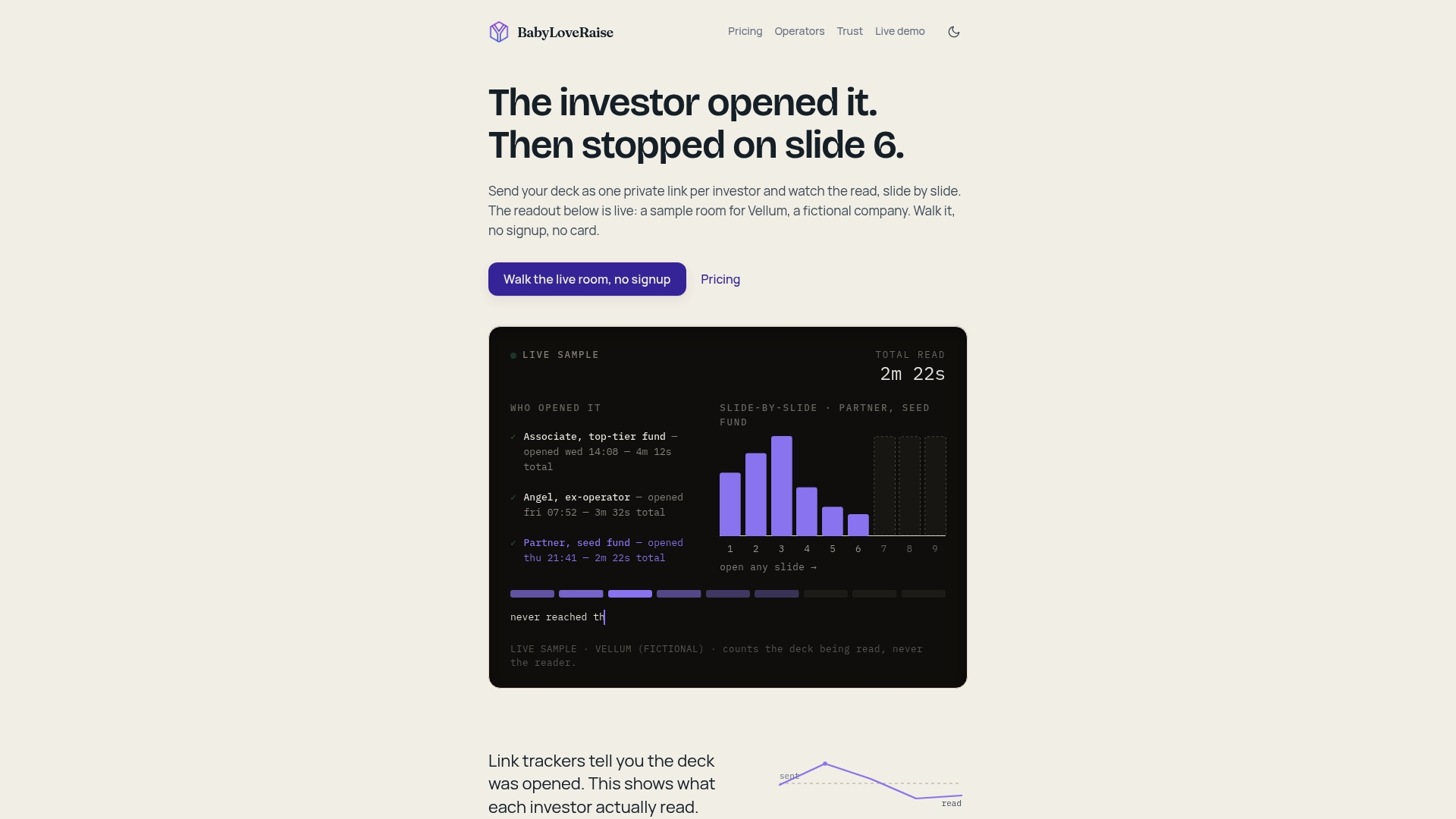
A few specifics worth knowing before you start a room. Pricing runs $399 per quarter or $149 per month for the raise room itself, priced around the raise rather than as a forever per-seat license. Per-slide dwell tracking shows exactly where investor attention lands or drops off, feeding directly into which slides you revise next. And if you’re a fractional CFO or advisory firm running raises for multiple founders, the Operator seat gives you a white-label console across every client room, with monthly and annual per-seat pricing available.
If you want to see the controls and retention policies behind the tracking before you commit, BabyLoveRaise’s trust and security details cover exactly that. Otherwise, head to the pricing page and start your first raise room today.
Sources
Deal teams increasingly rely on document analytics to guide diligence timing, a trend Bain’s M&A reporting tracks across recent deal cycles. For the security side, IBM’s data breach research explains why short retention windows matter, and LawtonPDF’s protection tools cover complementary PDF-level locks worth pairing with any tracking link.
FAQ
What Makes a Document Tracking System Good?
A good system separates real reads from bot scans, reports per-page engagement rather than one vague “opened” flag, and gives the sender revocation and expiry controls. The strongest implementations also disclose retention windows and avoid collecting more recipient data than the use case actually requires.
How Do I Know if a PDF Is Being Tracked?
Most tracked PDFs route through a unique link rather than a direct attachment, and the tracking happens on the sender’s server, not inside the file itself. If you received a document through a branded share link instead of a plain email attachment, assume opens and page views are being logged.
How Can I Track a Document I’ve Sent Without Making the Recipient Log In?
Generate a unique share link through a loginless tracking tool, send that link instead of the raw file, and the platform logs opens, dwell time, and downloads on the back end. Tools like BabyLoveRaise’s tracked share link workflow build a 48-hour follow-up trigger directly around that first-read signal for fundraising specifically.
How Does Document Tracking Work Technically?
Each recipient gets a unique link tied to an ephemeral token, and the server logs every open, page view, and download tied to that token in real time. More reliable platforms stitch server-side session data together to filter out background tabs and bot previews, which keeps the reported engagement time closer to an accurate read.
Is Loginless Tracking Less Secure Than Requiring a Login?
Not inherently. Security comes from token design, expiry, and revocation, not from forcing a password. A loginless link with short expiry and instant revocation can be more secure in practice than a login-gated file that stays accessible indefinitely because nobody remembers to deactivate the account.