
Operators: Run 2–3 Client Raises Using Per Raise Telemetry
Operator playbook for simultaneous client raises: 1–2 week sprints, per raise telemetry, Rule 506 compliance checklists, and Operator tier per raise pricing.
October 1, 2026 · 9 min read

Run each client as a concentrated one to two week fundraising sprint, supported by a tracked room and investor engagement data so your team follows up with the right people first. Pair that operating rhythm with documented compliance routines under Rule 506(b) or 506©, and avoid transaction-based finder fees that expose your firm to broker-dealer risk. This combination lets an operator run several client raises at once without losing track of who read what or why a deal stalled.
TL;DR:
- Running each fundraising sprint on a defined calendar with specific start and close dates boosts efficiency and maintains momentum across multiple client raises.
- Tracking investor engagement through telemetry allows teams to prioritize follow-ups based on actual activity instead of gut feelings or assumptions.
- Using Form D filings within 15 days, avoiding broad advertising under Rule 506(b), and restricting transaction-based finder fees are key compliance practices for private placements.
- Standardized workflows, templates, and role clarity enable firms to manage several client raises simultaneously without sacrificing organization or oversight.
- An Operator platform consolidates all client deal rooms, provides detailed engagement data, and offers scalable pricing, streamlining multi-client fundraising management.
BabyLoveRaisebabyloveraise.comRun Client Raises With Clearer SignalsBabyLoveRaise gives advisory firms branded raise rooms with per-slide engagement data across client fundraising campaigns.Explore BabyLoveRaise
Table of Contents
- Core strategy for managing many concurrent client raises
- Step-by-step playbook to run multiple client raises
- Compliance essentials and how to avoid broker-dealer risk
- Due diligence and supervisory documentation that makes private placements defensible
- How to staff and delegate across multiple active raises
- Using per-raise telemetry and templates that keep raises moving
- Fundraising as an operations discipline
- An operator tier built for firms running several client raises
- Primary sources behind this playbook
- Sources
- FAQ
Core strategy for managing many concurrent client raises
The operators who run multiple client raises well treat each one as a sprint, not an open-ended process. A raise that drags on for months bleeds founder attention and your team’s bandwidth; a compressed window creates urgency on both sides and makes it easier to compare investor interest in real time.
Sequencing volume matters as much as sequencing timing. Founders who go on to raise a Series A typically meet around 30 investors before closing, which gives operators a concrete target for outreach volume rather than a guess.
Roughly 30 investor meetings precede a typical successful Series A raise, and the same benchmark data show concentrated one to two week sprints outperform slow, months-long approaches.
Three habits separate operators who scale from those who stall:
- Run each client raise on its own calendar, with a defined start and close date.
- Set outreach volume targets per raise instead of contacting investors until momentum fades.
- Let engagement telemetry, not gut feel, decide which investor gets a call this week.
Step-by-step playbook to run multiple client raises
A repeatable workflow is what makes multi-client fundraising manageable instead of chaotic. The sequence below works whether you are running one active raise or five.
- Intake and readiness check. Confirm the client has a cap table, financials, an executive summary, and a working pitch deck before you open outreach.
- Stand up the raise room. Create a dedicated deal room for the client with a short readme and per-investor tracked links named consistently, such as clientname_investorlastname_deck_v1.
- Sequence outreach. Start with warm intros and angels to build social proof, then move to institutional partners once early interest is visible.
- Triage by telemetry. An investor who never opened the room gets a short, targeted reminder. One who read part of the deck gets a focused follow-up addressing the section they skimmed. One who finished it gets a direct next-step ask.
- Cluster meetings. Compress first meetings into a tight window so term sheets, when they come, land close together instead of trickling in over weeks.
Pro Tip: Build your follow-up cadence around the investor follow-up sequencing that matches each telemetry state, so no team member has to decide the tone of a message from scratch.
Compliance essentials and how to avoid broker-dealer risk
Every client raise runs under an exemption, and the two most common are Rule 506(b) and Rule 506©. Under 506(b), the issuer can raise unlimited funds without general solicitation, but sales to non-accredited investors are limited and Form D must be filed within 15 days of the first sale. Under 506©, general solicitation is allowed, but the issuer must take reasonable steps to verify that every purchaser is accredited, and Form D filing still applies.
- File Form D within 15 days of the first sale under either exemption.
- Never advertise broadly under 506(b); reserve general solicitation for 506© offerings only.
- Avoid transaction-based compensation for anyone helping introduce investors.
Transaction-based finder fees carry significant broker-dealer registration risk, since no broad safe harbor protects unregistered finders paid on commission. Safer structures use internal staff paid a salary or flat fee, or a registered placement agent when outside help is compensated on results.
Due diligence and supervisory documentation that makes private placements defensible
A defensible diligence file protects your firm and speeds up investor decisions. FINRA guidance expects firms to perform and document a reasonable investigation of each issuer, not just collect documents and hope they hold up later.
Build the file around these categories:
- Management background checks and any prior litigation or regulatory history.
- Current financials, material contracts, and cap table detail.
- Bad-actor screens required under Regulation D.
- A published data room readme that lets investors self-serve instead of pinging the founder for basics.
- Written supervisory sign-off recording that the investigation happened and who approved it.
Treat the readme as an operational tool, not paperwork. A one-paragraph summary per folder cuts down on off-hours investor questions and keeps deal momentum from stalling on a missing document.
How to staff and delegate across multiple active raises
Running several client raises at once works only when roles are clear. An operator acts as deal lead, a compliance liaison owns the diligence file and Form D timing, an associate manages outreach and telemetry triage, and a scheduler keeps meeting clustering on track.
- One operator can typically run two or three active sprint clients at a time while monitoring a handful of passive, pre-sprint accounts.
- Standardize the intake checklist, the readme template, and the follow-up email sequences across clients so nothing gets rebuilt from scratch.
- Reserve custom work for genuine edge cases, like an unusual cap table structure or a client raising under 506© for the first time.
Templates do the heavy lifting here. A firm running five raises without repeatable intake and outreach templates will spend more time on process than on investors.
Using per-raise telemetry and templates that keep raises moving
Per-raise tracked rooms turn two identical-looking silences, an investor who never opened the deck and one who read it cover to cover and passed, into two different signals your team can act on. Without that distinction, follow-up defaults to guesswork or a generic nudge sent to everyone.
Four templates carry most of the operational weight:
- A readme mapping each folder in the room to a one-line summary.
- A consistent per-investor link naming convention for tracking.
- A follow-up triage matrix mapping telemetry state to message type.
- A one-week sprint calendar blocking outreach, meetings, and follow-up days.
Pro Tip: Review slide-level dwell time weekly across active client raises; a slide that consistently loses attention across multiple investors is a deck problem, not an investor problem.
An Operator tier is built around this workflow: pricing charged per raise rather than per-seat licenses, engagement insights at the slide level, and the option of an editorial review for firms wanting a second look at the deck.
Fundraising as an operations discipline
Most fundraising advice focuses on pitch quality. The bigger lever for firms running multiple client raises is operational discipline: clear sprint boundaries, documented compliance, and telemetry that replaces guessing with evidence. Founders burn out less when the process around them is structured, and structure is what separates a firm that can run three raises from one that can run ten.
— Paul
An operator tier built for firms running several client raises
Running five client raises on five separate personal accounts, each with its own login and pricing, adds cost and confusion fast. The Operator tier gives fractional CFOs and advisory firms one firm-branded console across every active client room, with per-raise pricing instead of a per-seat fee that keeps climbing as you take on new clients.
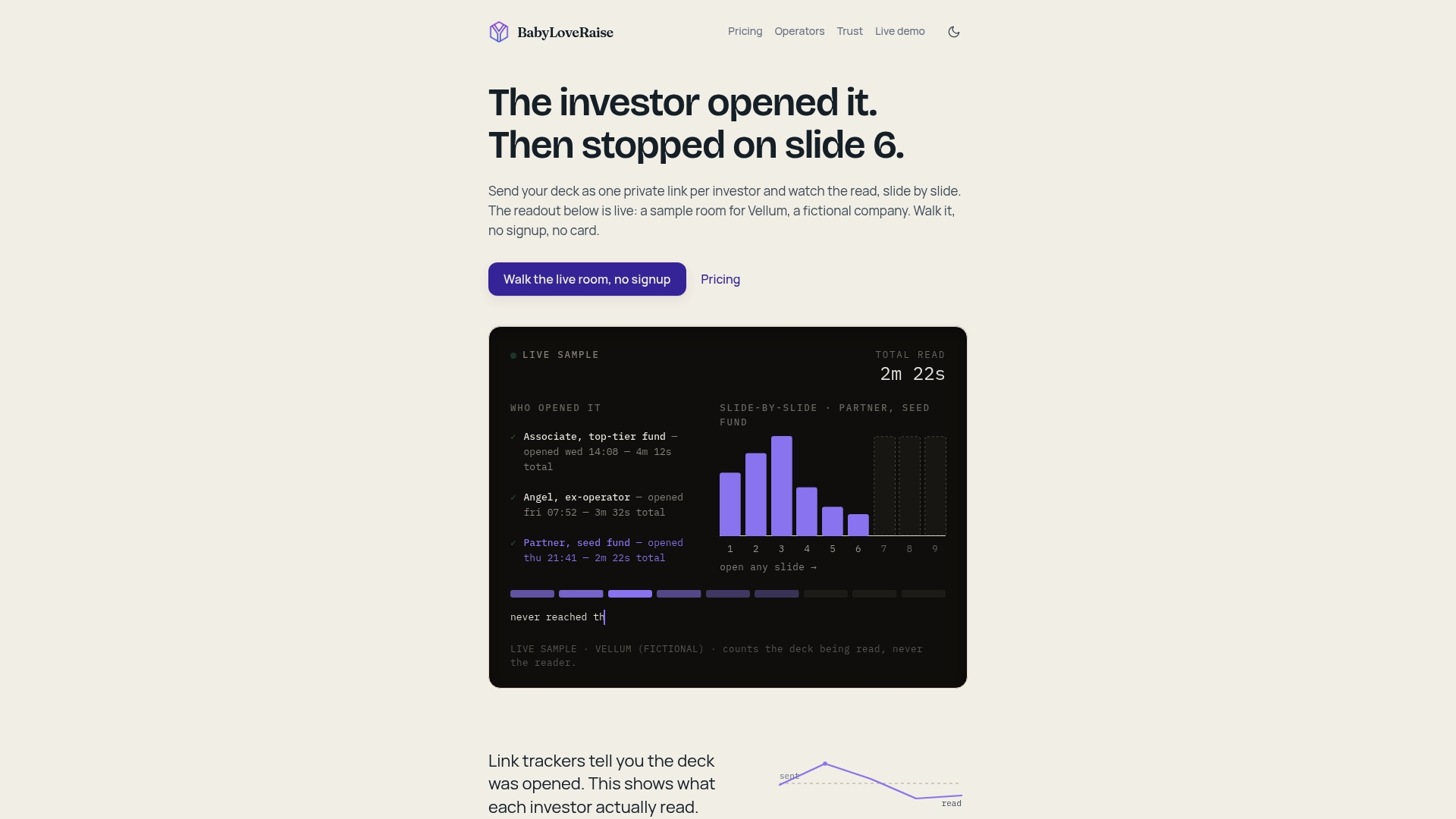
Telemetry lives at the center of the console: per-slide dwell, first-read alerts, and investor-level read status across every client raise in one place, so your team triages follow-up by evidence instead of memory. The platform tracks the document, not the person, which matters when you are managing confidentiality across clients who may be raising from overlapping investor pools. Firms that want extra hands on deck quality can add the editorial pass for a client’s deck without switching tools.
Check current plans and the Operator seat pricing to see what fits your client roster.

Primary sources behind this playbook
The compliance and benchmark claims in this guide come from primary regulatory and research sources rather than secondhand summaries:
- SEC guidance on Rule 506(b) and Rule 506© exemptions.
- FINRA Regulatory Notice 23-08 on private placement supervision.
- Legal analysis on finder and broker-dealer risk from Nelson Mullins.
Firms staffing up for multiple simultaneous raises sometimes also need outside help identifying operational or sales talent; a recruiter evaluation checklist is a useful reference when that need comes up.
Sources
- Private placements - Rule 506(b)
- General solicitation — Rule 506©
- Private funds and unregistered finders: How fund sponsors can avoid unnecessary risk
- Regulatory Notice 23-08: Private placements supervision and reasonable investigation
FAQ
How many client raises can one operator run at once?
Most operators can actively sprint two or three client raises at a time while keeping a few earlier-stage clients in passive monitoring. Capacity depends on how much of the intake, outreach, and follow-up work runs through standardized templates versus bespoke effort.
What is the difference between Rule 506(b) and 506© for a client raise?
Rule 506(b) lets an issuer raise without general solicitation but limits non-accredited investor sales, while Rule 506© allows public solicitation only if the issuer verifies every purchaser is accredited. Both require a Form D filing within 15 days of the first sale.
Are finder fees for investor introductions legal?
Paying a finder on a transaction basis carries significant broker-dealer registration risk since no broad safe harbor covers unregistered intermediaries paid this way. Safer options include compensating internal staff on a non-transaction basis or working with a registered placement agent.
How long should a client fundraising sprint last?
A concentrated sprint of one to two weeks tends to create more competitive pressure among investors than a slow, open-ended outreach process. This cadence aligns with Series A benchmark data showing concentrated approaches outperform long, cold outreach timelines.
How does BabyLoveRaise help firms manage multiple client raises?
An Operator tier gives advisory firms a firm-branded room for each client raise, with slide-level engagement telemetry and pricing charged per raise rather than per seat. Details on plan pricing are available on the operator page.