
Fundraising With an Advisor: Prioritize 40–50 Investors by Deck Reads
Run a startup raise with an advisor as one project. Use tracked deck engagement to sequence outreach, qualify investors, and guide the raise to closing.
October 15, 2026 · 9 min read

An advisor-led fundraising workflow is an advisor-run, founder-aligned process that turns tracked deck engagement into prioritized outreach and higher meeting conversion. Run well, it produces fewer blind follow-ups, faster qualification of real investor interest, and deck revisions aimed at the slides that actually lost attention. Tools like BabyLoveRaise support this by pairing per-slide engagement data with per-raise pricing instead of a perpetual seat license.
TL;DR:
- Start with a target list of roughly 40 to 50 investors, then send the deck in batches so early engagement can shape later outreach.
- Use engagement to tailor each next contact: remind unopened investors, address where readers stalled, and ask directly for meetings after full reads.
- Keep one tracked deck link and label each revision, using slide completion and dwell time to spot drop offs before sending another batch.
- Advisor agreements commonly pair $5,000 to $20,000 setup fees with commissions of 1% to 8%, and pay tied to funds raised may raise registration concerns.
- For a Rule 506© offering, file Form D within 15 days after the first sale and verify every purchaser as accredited.
BabyLoveRaisebabyloveraise.comPrioritize Investor Follow-UpsTrack first reads and slide engagement in a fundraising room, so you can distinguish unopened decks from readers who finished.Explore fundraising deck tracking
Table of Contents
- What the advisor actually does beyond making introductions
- Step-by-step advisor-led fundraising workflow from prep to close
- Materials and deck management best practices for an advisor-led raise
- Investor outreach sequencing and timing tied to engagement signals
- Advisor compensation norms and regulatory checkpoints founders must budget for
- Tools, integrations, and handoffs for tracking the raise
- The one habit that separates disciplined raises from chaotic ones
- How BabyLoveRaise supports the advisor-led workflow
- FAQ
- Sources
- Primary SEC and practitioner documents to read next
What the advisor actually does beyond making introductions
A good fundraising advisor functions as an extension of the founding team, not a rolodex. The tactical value shows up in daily operating discipline: enforcing outreach cadence, maintaining the pipeline, and making sure no warm lead goes cold from neglect. Practitioners who work closely with advisor engagements note that the advisors who deliver the most value produce refined materials and optimized pipeline management, not just cold introductions that arrive without context.
Concretely, that work breaks down into a few deliverables:
- A refined deck and narrative, edited for the specific investor set being targeted.
- A prioritized investor list, ranked by fit and likelihood to move quickly.
- Qualification calls that filter out tire kickers before they reach the founder’s calendar.
- Meeting prep and negotiation support once term sheets start arriving.
An advisor who adds context to an introduction, and follows up on it, converts a cold intro into a qualified conversation far more reliably than a forwarded email thread ever does.
Step-by-step advisor-led fundraising workflow from prep to close
A pre-seed or seed raise run with an advisor tends to follow a predictable sequence. Treating it as a project with stages, rather than an open-ended search for yes, keeps both the founder and advisor accountable.
- Prep: Build a target list of roughly 40 to 50 investors, confirm the deck and data room are current, and run a basic compliance check on how the raise will be marketed.
- Launch: Send the deck in staged batches rather than all at once, using a tracked link so opens and engagement show up immediately.
- Qualification: Prioritize follow-up based on engagement, not gut feel. Set clear criteria for when a read earns a meeting ask.
- Scheduling: Route engaged investors into a consistent meeting-booking routine instead of ad hoc email threads.
- Diligence and negotiation: Coordinate counsel, subscription documents, and escrow logistics once a term sheet is on the table.
- Close: Archive the raise room, log which investors converted, and update the cap table.
Pro Tip: Batch your first sends so you can read engagement signals before the rest of the list goes out.
Each stage has a clear exit condition, which is what keeps an advisor-led raise from sprawling into months of unstructured outreach. A founder who tracks target list, deck, and compliance in prep moves faster through launch because nothing is improvised mid-sequence.

Materials and deck management best practices for an advisor-led raise
Running the raise through one canonical link, instead of a scattered mix of PDFs and Drive folders, is what makes engagement data usable. A single tracked link also lets an advisor control who can forward it.
- Use separate link registers: a first send for cold outreach, a forwardable version for warm referrals, and a private link for late-stage diligence.
- Treat per-slide dwell time and completion rate as signals, not vanity metrics: a slide that consistently loses readers needs a rewrite before the next batch goes out.
- Label each version clearly (v1, v2, post-feedback) so an advisor can tie a deck edit to the exact point it was tested.
- Lock downloads or apply a watermark on drafts still in play, and preserve a free, permanent archive of the deck once the round closes.
This mirrors the thinking behind a disciplined pitch deck strategy: the deck is a living document during the raise, and the data from how it is actually read should drive each revision.
Investor outreach sequencing and timing tied to engagement signals
Timing follow-up to engagement, rather than to a generic calendar reminder, is what separates an advisor-led process from a mass email blast.
- Send the deck and check for a first read; if nothing registers, a short nudge is appropriate.
- If the investor opened it but stalled partway through, a second touch referencing the specific section they reached tends to land better than a generic check-in.
- If the investor read to the last slide, ask for a meeting directly. That level of engagement is the strongest signal available before a call happens.
- Set a timeout rule for leads with no engagement, after which they move to a lower-priority list rather than consuming ongoing attention.
The script changes with the signal. An unopened deck gets a brief, low-pressure reminder. A skimmed deck gets a targeted follow-up addressing whatever section likely caused the drop-off. A fully read deck gets a direct meeting ask. Advisors are generally better positioned to handle the first qualification call, since they can speak candidly about terms and comparables, while the founder should lead meetings once the conversation turns to vision and product.
Advisor compensation norms and regulatory checkpoints founders must budget for
Advisor fees in early-stage raises typically combine two pieces: an upfront setup fee and a success-based commission. Engagement letters reviewed in SEC filings show setup fees commonly ranging from $5,000 to $20,000, paired with a success commission that can run from 1% to 8% of gross proceeds.
Fee structure is shaped by who is doing the soliciting. An advisor who is simply consulting on strategy operates differently from a registered broker-dealer, and compensation tied to a percentage of funds raised may raise broker-dealer registration considerations.
- For a Rule 506© offering, Form D must be filed with the SEC within 15 days after the first sale.
- Rule 506© permits general solicitation, but every purchaser must be verified as an accredited investor.
- Regulation A offers a separate path with its own offering caps and investor requirements.
- Budget beyond advisor fees for filing costs, due diligence expenses, and escrow or platform fees tied to closing.
Tools, integrations, and handoffs for tracking the raise
Connecting deck engagement to a CRM is what turns raw analytics into daily tasks instead of a dashboard nobody checks.
- Map a first read to a “contacted” stage, sustained slide dwell to “engaged,” and a completed read to “ready for meeting ask.”
- Automate the boring parts: auto-create a follow-up task the moment engagement crosses a threshold, and sync meeting links directly to the advisor’s or founder’s calendar.
- Advisory firms running several client raises at once are generally better served by a white-label operator console than by juggling separate single-raise rooms, since it keeps each client’s data and branding cleanly separated.
A founder running this process solo benefits from the same investor tracking discipline a firm would apply across its client raises, just scaled to a single raise.
The one habit that separates disciplined raises from chaotic ones
If there is a single change worth making, it is this: track the first send and act within a consistent window, rather than letting follow-up timing drift with whatever feels urgent that day. That discipline cuts wasted follow-ups to investors who never opened the deck and raises the rate of reads that actually convert to meetings. Treat the raise as a measurable project, not a string of hopeful emails.
— Paul
How BabyLoveRaise supports the advisor-led workflow
We built BabyLoveRaise around exactly this workflow: a tracked raise room with one canonical share link, first-read notifications the moment an investor opens the deck, and per-slide dwell data that shows which pages hold attention and which get skimmed. Measured watermarking helps keep drafts contained during an active raise, and the room converts to a permanent free archive once the raise closes.
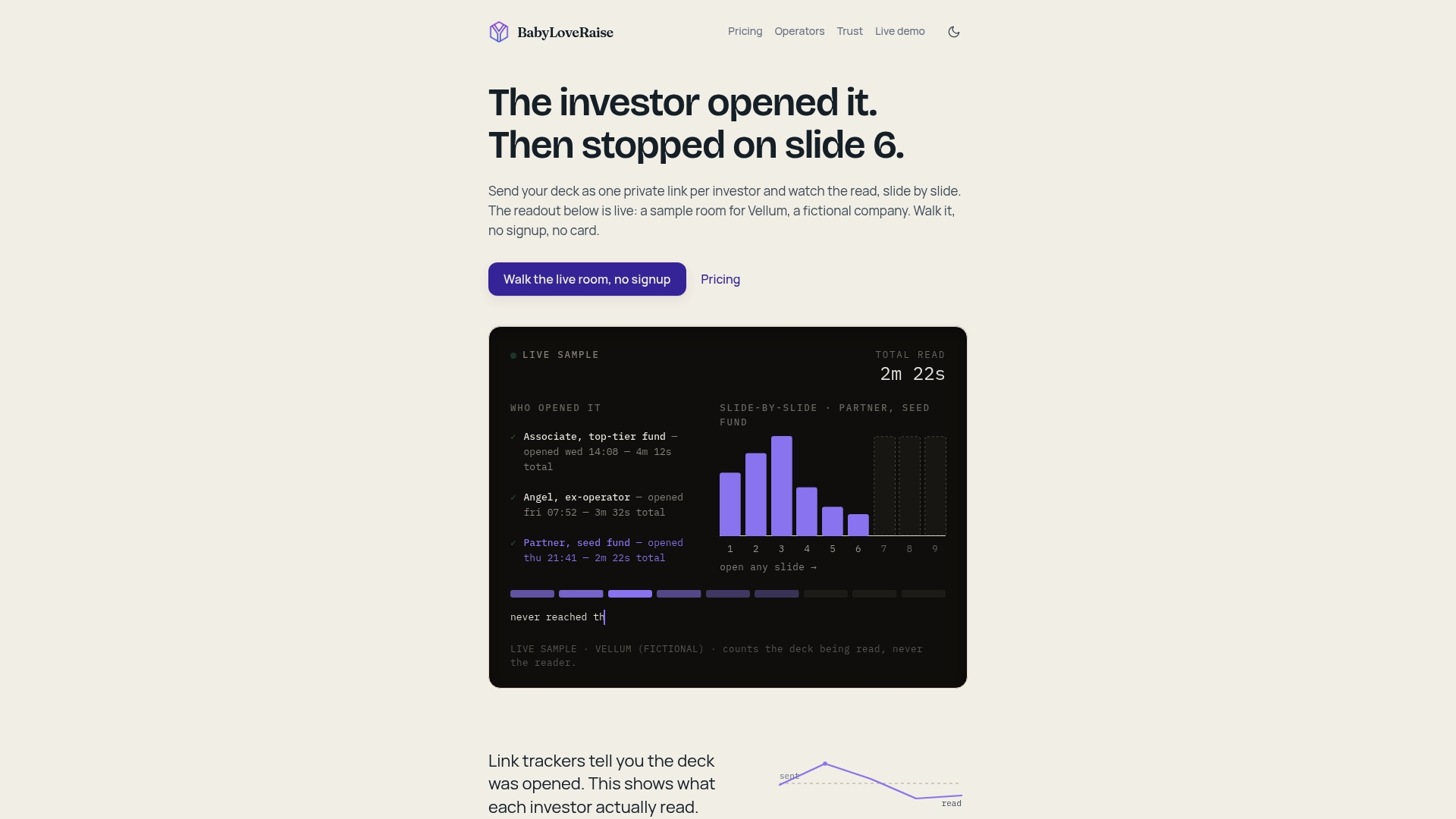
A single founder running one raise fits naturally on the raise room plan, priced at $399 per quarter or $149 per month. Advisory firms managing several client raises at once get more out of an Operator seat, at $399 per month or $3,990 per year, which runs firm-branded rooms across every client. Founders who want hands-on help tightening the deck itself can add an editorial pass; current prices are on our pricing page. If you are planning a raise now, start with pricing and see which setup fits.
FAQ
What does an advisor-led fundraising workflow actually mean?
It means a fundraising advisor runs the operational side of a raise, outreach discipline, pipeline tracking, and follow-up timing, while staying aligned with the founder’s goals rather than simply making introductions. The workflow typically moves through prep, launch, qualification, diligence, and close.
How many investors should go on a target list for a seed raise?
A target list of roughly 40 to 50 investors gives a seed raise enough volume to absorb the usual drop-off between first contact and a signed check. Fewer targets leave little room for the no’s that are a normal part of any raise.
How much do fundraising advisors typically charge?
Advisor compensation commonly combines an upfront setup fee, often $5,000 to $20,000, with a success commission based on gross proceeds. Fee structure can shift when a registered broker-dealer is involved, and percentage-based compensation tied to capital raised may raise registration considerations.
What is Rule 506© and why does it matter for outreach?
Rule 506© lets issuers generally solicit and advertise a private offering, provided the issuer takes reasonable steps to verify that purchasers are accredited investors and files a Form D notice within 15 days after the first sale. It matters for outreach because it shapes how openly a raise can be marketed before those verification steps are met.
What should I track to know if my deck is working?
Track first reads, per-slide dwell time, and whether investors reach the last slide, since those signals show where attention holds and where it drops. A platform like BabyLoveRaise reports this per investor so follow-up and deck edits target the right people and the right slides.
Sources
Primary SEC and practitioner documents to read next
- Sec
- Sec
- Andes - Intec Bioplastics Reg A+ Tier 2 Engagement Agt v3.0.pdf
- Paulhastings
- Overview of Capital-Raising Exemptions