
Business One-Pager: What to Include and How to Send It
Build a business one-pager investors read: the blocks in order, word counts, design rules, and when to send it before the deck, with a way to see who read on.
November 24, 2026 · 12 min read
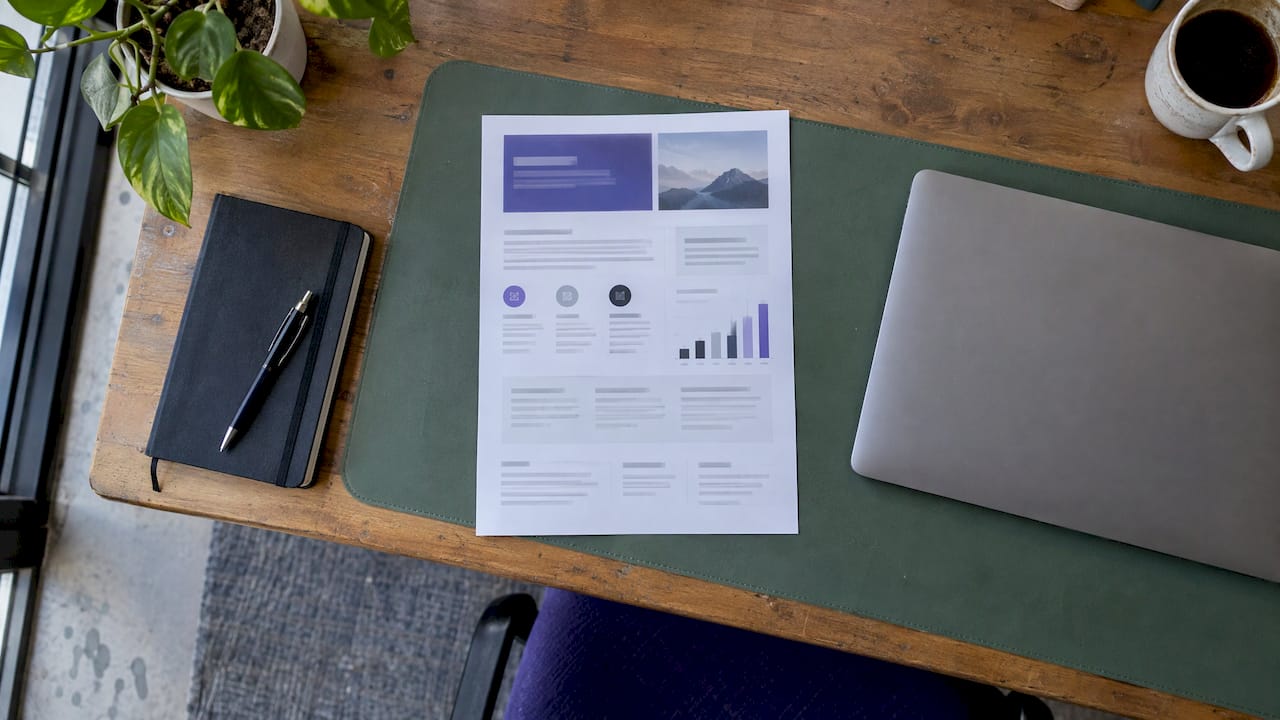
A business one-pager is a single page that tells a stranger what your company does, why it is working and what you want from them, in about a minute. For a founder raising pre-seed or seed money, it is usually the first document an investor sees, and its only job is to earn the next step: a reply, a call, a request for the deck. Build it from nine or ten short blocks, put a number in almost every one, and send the deck afterward in a form where you can tell who actually read it. That last part is where most founders lose the thread, and we cover it below.
BabyLoveRaiseKnow Who Reads Your Fundraising DeckSend your deck through one raise room to see who opens it, which slides hold attention, and who reads through to the end.VisitTL;DR
- Write one page, roughly 150 to 300 words, in this order: one-liner, problem, solution, market, traction, business model, team, the ask, contact.
- Put the raise amount near the top and a dated number in every claim. Pages without numbers read like mission statements.
- Send the one-pager to earn the meeting. Send the deck when someone replies with interest.
- If you ask for investment, the page is part of a securities offering, so check who you send it to with a securities attorney.
- After the one-pager lands, send the deck as one room link so you learn who opened it, who finished it and which slides lost them.
Table of Contents
- What a one-pager is for
- The blocks, in order
- Length, design and the one-minute test
- Keep the one-pager and the deck consistent
- One-pager or deck: what to send when
- What happens after the one-pager lands
- Our view on the one-page habit
- Run the raise room
- FAQ
- Sources
What a one-pager is for
A one-pager is not a shrunken deck. One startup one-pager template frames its single job as getting the reader to a next step: a first call for an investor, a meeting for a partner, a reply for a journalist. It works like an executive summary, a document in miniature that can be read in place of the longer one. If the reader gets only this page, they should still understand what you do, for whom, and why it is working.
That framing settles most design arguments. A line that does not move the reader toward a call is a candidate for deletion. One guide on investor one-pagers points out that investors spend about two and a half minutes on a full deck, so the one-pager competes for a slice of that. Another says an investor typically gives the page about a minute, often on a phone, often before deciding whether to open the deck at all.
The blocks, in order
The published templates differ in small ways, but they converge. Here is the order that most of them share, with a budget for each block. Treat the words as a ceiling, not a target.
| Block | What goes in it | Rough budget |
|---|---|---|
| Header | Company name, one-line description, website, stage | 15 words or fewer for the line |
| The raise | Amount, instrument, and what it buys | 1 line, top of page |
| Problem | Who has it, how often, what it costs them, with a number | 30 to 50 words |
| Solution | What the customer gets, in their words | 40 to 60 words |
| Market | Bottom-up count of buyers, with the math | 1 to 2 lines |
| Traction | 3 to 4 dated numbers with a comparison or trend | 3 to 4 bullets |
| Business model | Pricing, deal size, margin | 1 to 2 lines |
| Team | One qualifying fact per founder | 1 line each |
| Contact | Name, email, phone | 1 line |
The nine-section version comes from a startup one-pager guide that also adds a small competition table of two to four alternatives. A ten-block template adds a why-now line and compresses the order from Sequoia’s business-plan guide into one to three sentences per block.
Start with the one-liner, but write it last
The same template advises writing the first line last, after everything else is filled in, then rewriting it until a stranger could repeat it. If you cannot get there, the usual cause is that you have not chosen a first customer yet. Fix that before you fix the sentence.
State the raise at the top
There is a pattern in a measurement of 20 investor one-pagers: the raise was stated in the top line on all six pitch one-pagers in the set. Investors want to know early whether your round fits their check. A good ask line names the amount, the instrument and the milestone. One published example reads like this: raising $1.5M seed on $8M post-money via SAFE, $500k committed, $1M lead sought, with funds tied to a named revenue milestone, as shown in River’s investor one-pager guide. Substitute your own figures, and only figures you can defend.
Make traction a rate and date it
Traction is the block investors read hardest. Give three or four numbers, each with a date and a comparison: monthly revenue as of October, up from the month before, or signed pilots since launch. Paul Graham’s essay on convincing investors, as summarized in the same template, says investors look for formidable founders, a promising market and usually some evidence of success so far, and that the page should show each with facts rather than claims like huge market or passionate team. The same piece notes his 5 to 7 percent weekly growth benchmark as a reason to express traction as a rate.
If your numbers are early, proof can include outside validation. Founders in AI categories sometimes lean on third-party reviews for AI startups to back up traction claims. Whatever you use, put a date next to it.
Length, design and the one-minute test
The published numbers vary, so pick a range and stay inside it. A measurement of 20 investor one-pagers found pitch pages ran 154 to 226 words, with a median of 194 and a median of 15 numbers. Another library puts a startup page at 100 to 200 words. Others recommend up to about 300 words with real white space. The common thread is that the page has few words and many numbers.
Design rules that repeat across the guides:
- Build a hierarchy. One big title, medium subheads, small body text. One design guide also asks for one call to action as the loudest element after the headline, and two fonts with one or two colors.
- Protect white space. One guide suggests 40 to 50 percent white space and body text under 150 words, with no fonts under 10 point.
- Do not shrink the type. Shrinking a deck onto one page in small type is the first mistake on a common-mistakes list, followed by leaving out numbers and opening with company history instead of what the reader needs.
- Date and bold the numbers. One guide says to date traction figures with an as-of line, send a named PDF, and make sure every number can be sourced within a day if an investor asks.
- Check it on a phone. The same design guide notes many investors open the PDF on mobile. If the page fails the under-a-minute test, the fix is less content in a clearer order, not more polish.
There is also a layout choice. A format guide describes a two-column layout with a sidebar as the default for investor pages: the story in the wide column, the numbers and facts in the narrow one. Readers scan a visual page in a Z, so the headline goes at the top, proof sits on the first line the eye crosses, and the call to action goes at bottom right.
Templates to start from
If you want a blank frame, a free business one-pager template is available in Word, Google Docs and PDF and covers products, value proposition, business model, key team members and achievements. Use it for structure, then cut it down to the blocks above. A template cannot choose your numbers for you.
Keep the one-pager and the deck consistent
The cleanest way to write the page is to derive it from the deck. The same common-mistakes guide suggests that the deck’s cover line becomes the first sentence, the traction slide supplies the three numbers, and the ask becomes the closing line, with both documents updated the same day. Another guide goes further and recommends writing the summary last from the completed plan, so numbers match what diligence will find, and reading it aloud: any sentence that sounds like a slogan needs a number or must go.
This matters because conflicting figures between documents hurt. One guide cites a venture firm’s warning that mismatched numbers are a fast way to kill deal momentum and erode trust. If your one-pager says $42k MRR and your deck says $39k, the investor will not assume you rounded. For the deck itself, see our guides to pitch deck slide order and pitch deck version control.
One-pager or deck: what to send when
The rule of thumb in the research is simple. One biotech guide puts it as: if you are trying to get the meeting, send the one-pager, and if you are in the meeting, use the deck. When in doubt, lead with the one-pager, since you can always follow with the deck but can never un-send an attachment nobody asked for.
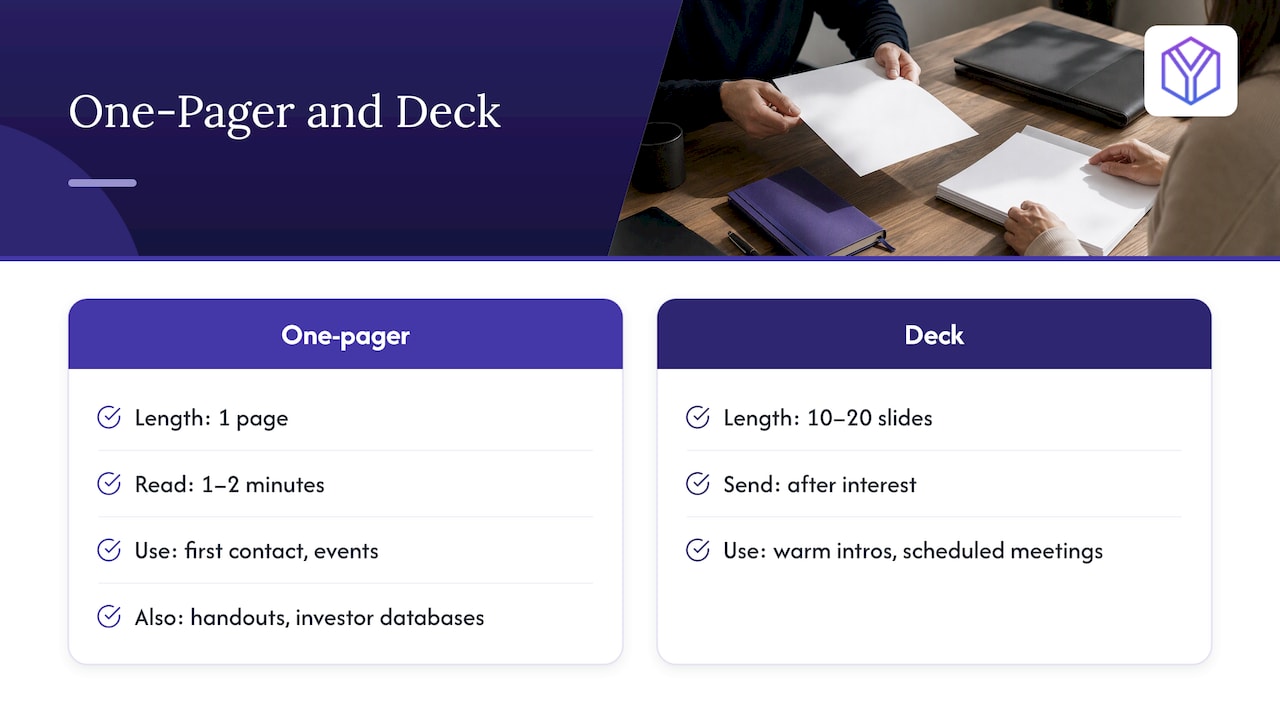
A comparison of the two formats sets out the split. The one-pager is one page of facts read in one to two minutes, suited to first contact, event handouts and investor databases. The deck runs 10 to 20 slides. Send the deck when someone replies with interest, when a warm introducer asks for something to forward, or before a scheduled meeting.
For cold outreach, one fundraising-documents guide advises putting the one-pager in the email body instead of attaching a PDF, and cites cold outreach converting at 3 to 5 percent versus 40 to 50 percent for warm introductions. A warm path beats a clever page. When you ask for an introduction, make the email easy to forward: one guide describes the double opt-in approach, where each party agrees before the introduction is made, and an introduction email under 80 words.
We go further into this sequence in why we send the one-pager first and track slides, and in our comparison of a pitch deck and an investment memo.
A US legal check before you send
In the US, a one-pager that asks for investment is part of a securities offering. Under Rule 506(b), general solicitation is barred, so you send it only to people you know or people referred through someone you know. Rule 506© allows wide sharing but requires reasonable steps to verify that each buyer is accredited. Which rule your raise uses is a question for your securities attorney before the page goes into a public database or social post. Do that before you send, not after.
What happens after the one-pager lands
A good one-pager gets a reply that says send the deck. At that point most founders attach a PDF or paste a Drive link and wait. Silence then means one of two very different things: the investor never opened it, or read everything and passed. From your inbox they look identical, and you follow up the same way on both.
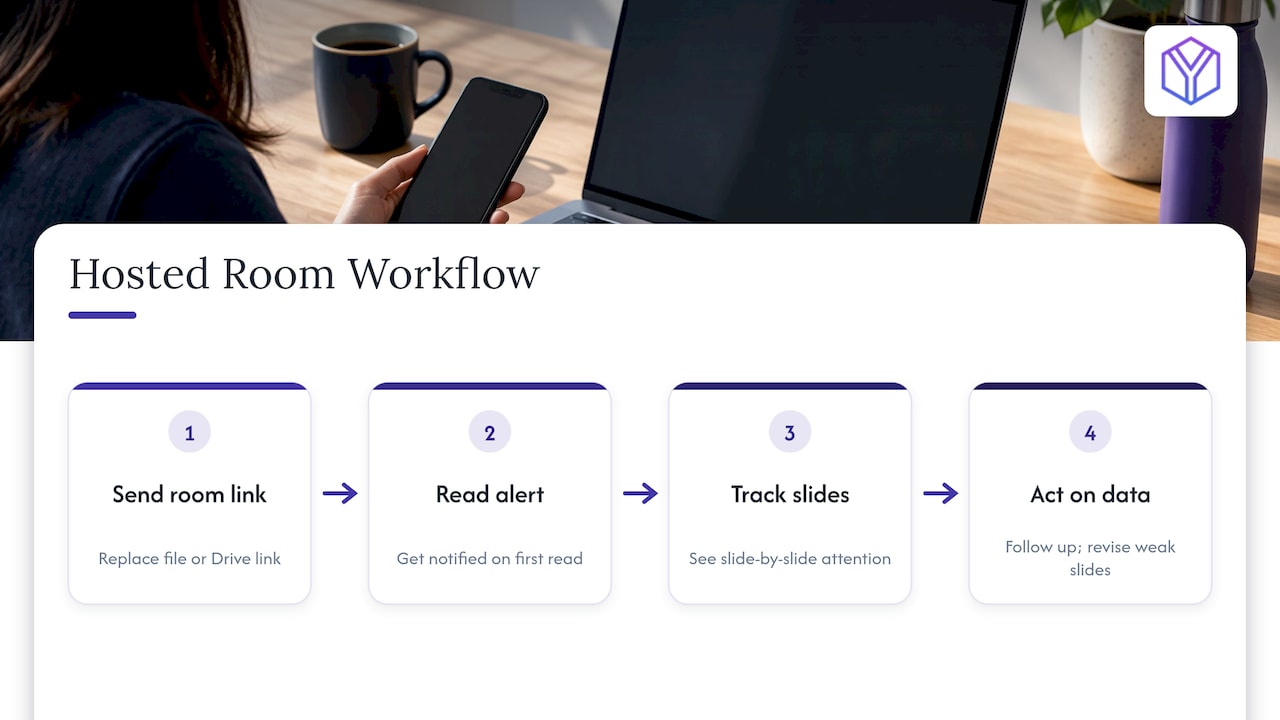
This is where a hosted raise room changes the work. You send one room link instead of a file. The room notifies you on first read and records per-slide engagement: who opened the deck, who reached the last slide, and which slides held attention versus got skimmed. The two silences become two states you can act on. Follow-ups go to people who read, and deck revisions go to the slides where attention died. For a solo founder with no cofounder to ask, that dwell data stands in for the second reader you do not have.
Share links come in three registers: first send, forwardable and private. That fits the second-reader problem the one-pager creates. When a partner at a fund forwards your page, the deck that follows can be sent in a way that tells you whether it traveled. Downloads can carry a measured watermark, and our tracking reports on the document, not on the person. For the setup details, see our guide to pitch deck access control and our notes on investor meeting prep and tracking deck reads.
Our view on the one-page habit
Founders spend a week on the one-pager and thirty seconds on what happens after it. We think that is backwards. The page is a door, and a door only matters if you know who walked through.
The one-pager and the deck are one argument at two lengths. Keep the numbers identical, send the short version first, and then send the long one in a form that answers the only question that matters on day three: did they read it?
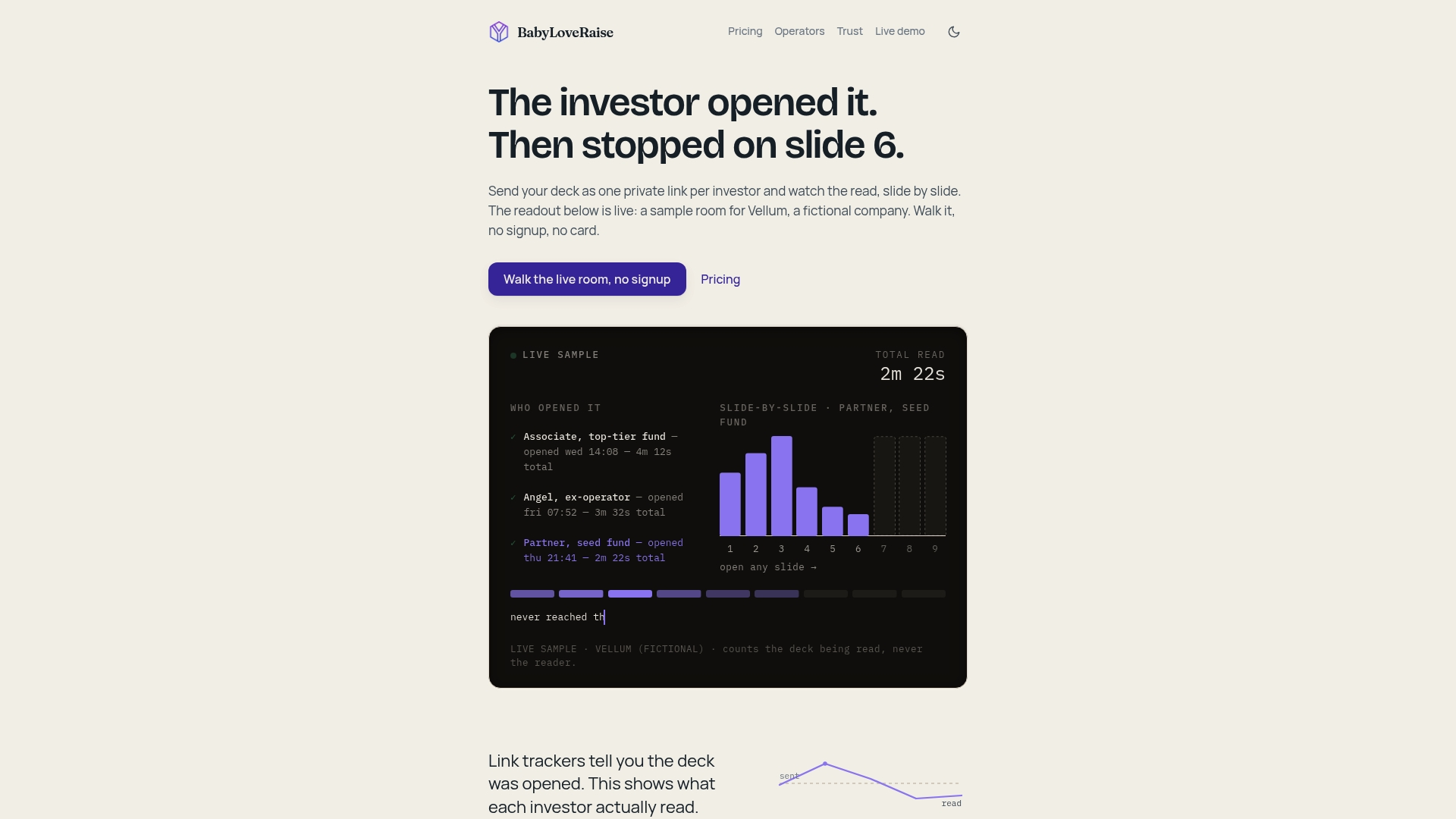
That is why we built BabyLoveRaise around the raise itself rather than around a file share. Per-slide engagement, a target list of which investors finished the deck, and pricing per raise rather than per seat forever all follow from treating a fundraise as a project with a start and an end. When the raise closes, the room becomes a free permanent archive.
Paul
Run the raise room
Once the one-pager has done its job, the deck goes into a raise room. The raise room is $149 per month or $399 per quarter, and the quarterly plan fits a typical raise window. If you want a second pair of eyes before the deck goes out, we also offer an editorial pass, and fundraising advisory firms and fractional CFOs can run firm-branded rooms across client raises with an Operator seat at $399 per month per seat or $3,990 per year per seat. Details are on our pricing page and our operators page.
If you are still building the deck behind the page, start with how to build a pitch deck for investors.
FAQ
How long should a business one-pager be?
One page, and usually between 100 and 300 words depending on the guide you follow. A measurement of 20 investor one-pagers found a median of 194 words. Keep the type readable and use white space rather than shrinking the font to fit more.
What should the first line say?
It should say what the company does in under 15 words, in terms a stranger could repeat. Write it last, after the rest of the page is done. Put the raise amount right beside or just under it so the investor knows the size of the ask at once.
Can I use AI to write my one-pager?
AI can draft the structure and tighten wording, but the numbers must be yours and must match your deck. Check every figure against its source, date it, and read the page aloud. Any sentence that sounds like a slogan needs a number or should be cut.
Do I send a one-pager as a PDF or in the email?
For cold outreach, put the content in the email body. For a warm introduction or a reply to interest, send a named PDF that is dated and under about 2MB so it opens quickly on a phone. Then send the deck as a single link once the investor asks for it.
Sources
- Startup one pager: a template you can copy
- Investor One Pager: Free Template and 12 Examples
- What to Put on a Startup One Pager for Investors
- Startup one-pager: 9 blocks, an example and a template
- Investor One-Pager Template & Examples
- Startup One-Pager Guide: Nine Blocks Investors Read in 60 Seconds
- Investor One-Pager Template: What Earns a Meeting
- One-Pager for Investors: Template and Examples
- One-Pager Examples: 21 Layouts + Free Templates
- One-Pager vs Pitch Deck: When to Send Which
- Startup One-Pager Examples for Investors (and a Template)
- Startup Executive Summary: A One Page Checklist
- One-Pager Format: Size, Length and What to Include
- Free Business One-Pager Template
- Teaser, One-Pager, Deck, Data Room: What to Send When
- How to write a biotech one-pager investors actually read